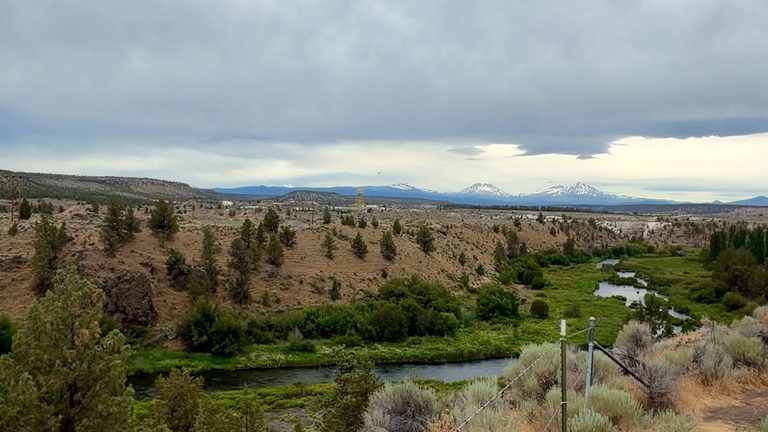
A high-stakes land-use dispute in Deschutes County, Oregon, has reached state regulators in Salem, exposing a deep divide over what defines true farmland in Central Oregon. The controversy centers around a 710-acre parcel in the Lower Bridge Valley, where developers recently secured county approval to rezone the ground from Exclusive Farm Use (EFU) to Rural Residential 10-acre lots for a community called ‘The Peaks 360.’
Local Control vs. State Intervention
Supporters of the rezone argue that the property was mistakenly categorized decades ago. Matt Cyrus, President of the Deschutes County Farm Bureau, explains that a broad-brush approach in the 1970s and 80s ignored local agricultural advisory recommendations. ‘The main committee chose to disregard the information… and chose to pretty much do a broad brush over all of Deschutes County,’ Cyrus said. ‘The 710 property is an elevated plateau that is made up of rock, sagebrush, juniper trees, some scattered bunch grass that is barely grazing land. It’s unsuitable for agriculture.’
Cyrus emphasizes that courts and the Land Use Board of Appeals (LUBA) have repeatedly agreed that the property is not viable farmland, calling the state-level challenge ‘venue shopping’ by opponents. He argues that developing the lots represents the land’s highest and best use, generating vital tax revenue for local schools and fire districts.
Concerns Over Water and Culture
Neighboring ranchers and conservationists view the rezone as a dangerous precedent that threatens the high desert’s water and culture. Ryder Redfield, local land steward and ranch manager, challenges the idea that the development offers ‘affordable housing’ and warns of irreversible damage to the local aquifer. ‘You’re taking away water from an industry. I like to say death by 10,000 straws,’ Redfield said. ‘A straw being a residential well, and death being a culture, a way of life.’
Redfield also cautions that shifting boundaries creates an ongoing cycle of urban sprawl across the county. ‘It starts with EFU land being turned into rural residential ten-acre lots. And then in time, that becomes five-acre lots,’ Redfield warned. ‘By making one EFU zone become RR-10, now somebody across the county can say, ‘Well, if they did it there, why can’t I?”
Original reporting: KTVZ (Central Oregon) — read the source article.