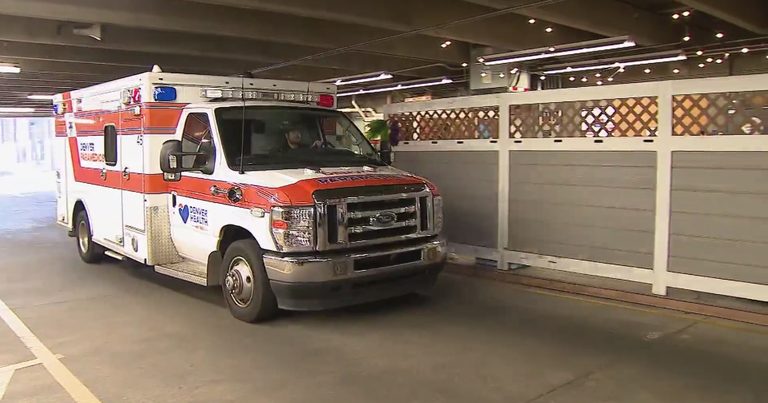
Denver officials rolled out the “Denver Dynamic Response Model” this week, a pilot program that changes how 911 calls are dispatched in order to better match resources to the acuity of each request. The change comes after Denver Health ambulances failed to meet the city’s nine‑minute response‑time benchmark for at least three straight years, according to CBS reporting cited by news‑usa.today.
City‑wide call volume averages about 140,000 calls per year. “When you look at our total call volume, 140,000 calls per year, most of those calls do not end up having people who are critically ill or critically injured,” said Justin Harper, Denver Health’s chief paramedic, in statements reported by both news‑usa.today and bytewire.news. Harper noted that rising demand for behavioral‑health crises, substance‑misuse incidents, and residents lacking primary‑care access are driving the high volume. “We’re seeing increased calls for behavioral health,” he added, “we’re seeing increased calls for substance misuse, we’re seeing increased calls for people who are utilizing 911 because they don’t have primary care healthcare, and so these are all perfectly reasonable uses of the 911 system.”
Under the new model, dispatchers will no longer treat nearly every call as an emergency. Instead, they will assess each call’s urgency and assign the appropriate resources, allowing fire engines and trucks to remain available for higher‑acuity fire and rescue runs. Fire Chief Desmond Fulton explained, “We’re going to have the opportunity to have our fire engines and trucks responding to higher acuity types of calls, which in turn would allow them to stay available for those types of calls,” as reported by both sources.
Fulton also said that if firefighters arrive at a call initially classified as non‑emergent and discover a patient who needs urgent care, they can notify dispatch to upgrade the response. “When we arrive on that scene and it’s a code 9 non‑emergent call, if it happens to be emergent… our officers and firefighters have the ability to notify dispatch, and then they would let Denver Health know, and they could step up their response accordingly for that emergent type of call,” Fulton said, per bytewire.news.
The pilot’s performance data will be collected over the next few months. Officials plan to present the findings to the Denver City Council next year, giving elected leaders a basis for deciding whether to expand the model citywide. The initiative aims to address the missed response‑time standards that CBS Colorado identified for 2023, 2024, and 2025, and which the agency is on pace to miss again in 2026.
What’s next: City staff will continue monitoring response times, resource allocation, and patient outcomes throughout the pilot period. A formal report is slated for the Denver City Council meeting scheduled for next year, where officials will decide whether to adopt the Dynamic Response Model permanently.
Sources: news-usa.today, bytewire.news