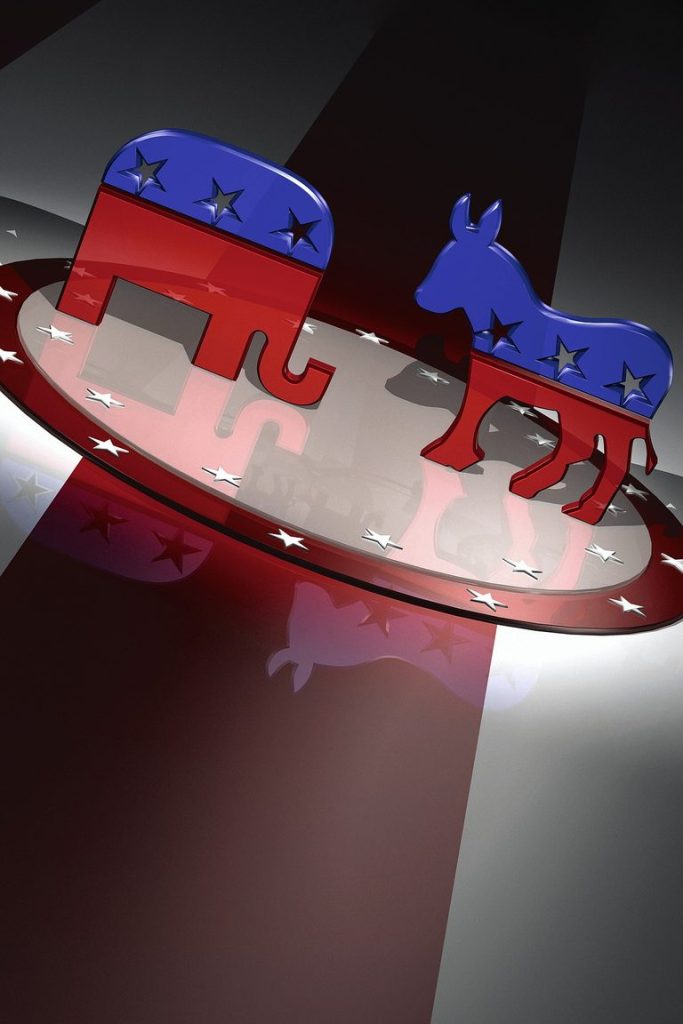
National political analysts project that Democrats may capture a majority of the 36 governorships up for election this November, a shift not seen since 2010. The Cook Political Report currently lists 13 races as competitive, with states such as Nevada, Wisconsin, Alaska, Iowa and Ohio in the spotlight.
GOP Defense Amid a Tough Midterm Landscape
Republicans, who currently hold a 26‑24 advantage in governor seats, are scrambling to defend their long‑standing grip on state power. The Republican Governors Association (RGA) emphasized that Republican governors remain focused on “lowering taxes, unleashing American energy and keeping communities safe.” The RGA added, “Contrast that with Democrat governors who hurt working families with tax increases and stunt job growth with bureaucratic regulation; the choice in November is clear.”
Key Competitive Races
Among the most closely watched contests are Nevada, where a Democratic governor could end Republican Gov. Joe Lombardo’s record of vetoing more than 160 bills passed by a Democratic legislature, and Texas, where Gov. Greg Abbott faces a tight race against state Rep. Gina Hinojosa. An Abbott campaign email described the race as a “toss‑up.”
In Iowa, Democratic State Auditor Rob Sand is seeking to restore split government after flipping two state Senate seats in special elections last year. If successful, Democrats would gain a check on the GOP’s legislative supermajority.
Other states where Democrats could break Republican dominance include Alaska, Georgia, Ohio, Florida and Texas. Conversely, Republicans are poised to strengthen their hold in Kansas, where Senate President Ty Masterson leads in gubernatorial polling over Democrat Cindy Holscher.
Expert Commentary on the Trump Factor
Political science professor Mark Jones of Rice University called the shifting landscape “a rebuke of the Trump model,” noting that President Trump’s low approval ratings on the economy and overall favorability are influencing voter sentiment. Jones added that the trend is typical for midterms, but the current environment is especially challenging for the GOP.
Implications for State Governance
Should Democrats secure more governor seats, many states could see divided government, with power split between the executive and legislative branches. The National Conference of State Legislatures reports that only 11 states currently have such split control.
Divided government can foster bipartisan compromise, but it also risks gridlock, as seen in Nevada where the governor’s office and legislature are already at odds. In states like Alaska and Ohio, new Democratic governors would provide additional checks on long‑standing Republican legislative majorities.
Legislative Landscape and Redistricting
Republicans still hold a substantial lead in state legislative seats—4,044 to Democrats’ 3,227—according to NCSL data. While Democrats aim to flip roughly 500 legislative seats nationwide, experts caution that rebuilding to pre‑2010 levels will be difficult.
The outcome of these governor races will also shape the next round of congressional redistricting, a process the Trump administration has urged Republicans to dominate in the U.S. House.
Looking Ahead
Voters across the country will decide whether the GOP can maintain its dominance of state executive offices or whether Democrats will usher in a new era of split government. The race will test the Trump administration’s messaging on tax policy, energy production and public safety against Democratic calls for expanded regulation and social programs.
Original reporting: Texarkana Gazette — read the source article.