State and federal Democrats are advancing blanket pauses on new data center projects, a move that could undermine local economies and national competitiveness. While the proposals aim to address community concerns, opponents argue the restrictions would halt innovation, reduce high‑wage employment, and strip counties of essential tax revenue.
State‑level actions spark controversy
In July, New York Governor Kathy Hochul announced a statewide moratorium on new data center construction. Similar measures are emerging in other jurisdictions, and at the federal level Independent Senator Bernie Sanders of Vermont and Representative Alexandria Ocasio‑Cortez have introduced legislation for a national pause.
Critics point out that data centers are the backbone of the internet and the emerging artificial intelligence economy. Without new facilities, the sector’s growth could slow, limiting the United States’ ability to compete with China in AI development.
Economic impact on local communities
Data centers generate substantial tax revenue that funds police, road maintenance, and teacher salaries. A 2025 PwC study reported $162.7 billion in combined federal, state, and local taxes from the industry in 2023. In Virginia’s Loudoun County, data centers occupy just 2 % of land but produce 38 % of the county’s tax base, enabling projects such as the construction of the first new school in Mecklenburg County in 75 years.
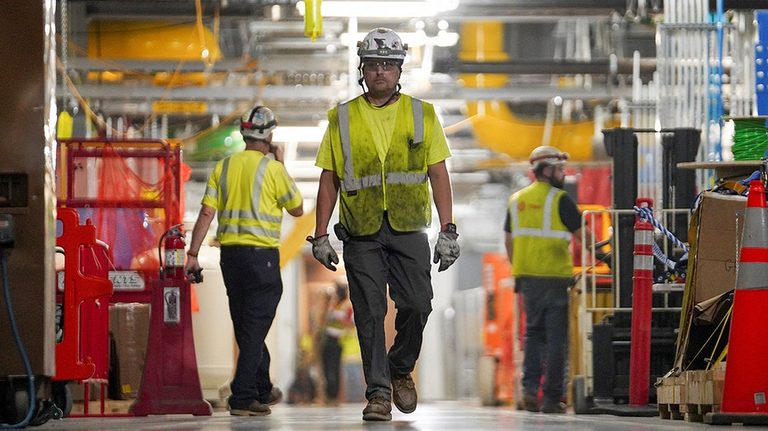
High‑paying union jobs are also a key benefit. Workers earn $45‑$60 per hour, allowing many to purchase homes in their late twenties rather than their early forties. The industry’s capital spending supports a new middle class in regions that have traditionally relied on manufacturing.
Infrastructure concerns and proposed solutions
Opponents of data centers often cite rising electricity and water costs. However, industry representatives note that many facilities either supply their own power or fund grid upgrades. Virginia’s Dominion Energy recently adopted a rate structure that requires large‑load customers, including data centers, to pay fees that cover the full cost of the electricity they consume.
Water usage is similarly modest. A Virginia legislative committee found that most data centers use as much water as an average large office building, and newer facilities increasingly employ closed‑loop cooling systems that recycle water repeatedly.
Noise and emissions from backup diesel generators are also raised, but generators typically run only about 20 hours per year for testing and maintenance. EPA data shows that air quality in Northern Virginia, a major data‑center hub, has improved over the past decade.
Calls for local control and expertise
Rather than imposing top‑down bans, some propose establishing Centers of Excellence at the state or national level. These centers would provide county boards and municipal zoning authorities with technical guidance, allowing communities to make informed decisions that balance economic benefits with local concerns.
In Virginia, Governor Abigail Spanberger and Democratic legislators faced pressure to eliminate a tax exemption for data centers. After engaging with industry and labor unions, the General Assembly passed a pioneering tax on energy consumption, laying groundwork for future discussions on water usage and emissions standards.
Conclusion
Data centers are privately owned American businesses that contribute significantly to jobs, tax revenue, and technological leadership. While community input remains essential, policymakers are urged to consider the broader economic and security implications before enacting sweeping moratoria.
Original reporting: Fox News (HLL/CB) — read the source article.