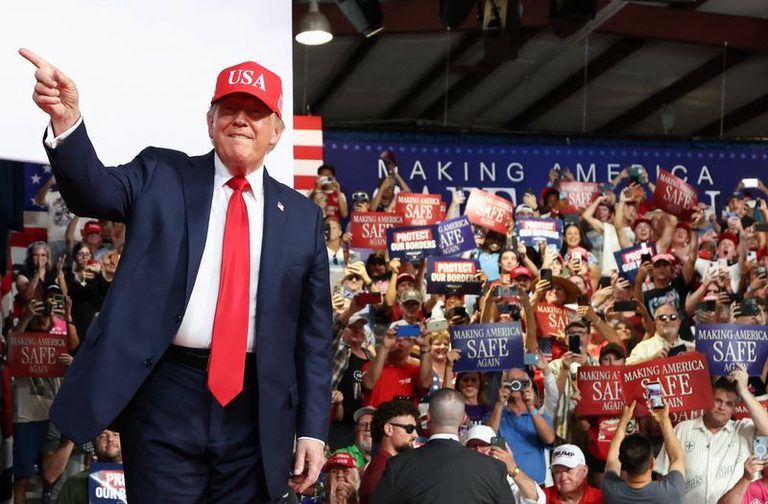
Republican leaders are scrambling to allocate resources after recent polls show Democrats gaining ground in ten states that President Trump won by double digits in 2024. Kentucky, Ohio, Alaska, Iowa, Texas, Florida, Kansas, Nebraska, Mississippi and South Carolina now appear within striking distance for Democratic challengers.
Polling trends signal a shifting battlefield
National polling data released this week indicates that Democratic candidates are within single‑digit margins of Republican incumbents in several of these states. In Kentucky, Democrat Charles Booker trails Rep. Andy Barr by only a few points, while in Kansas, Democrat Adam Hamilton is narrowly ahead of Sen. Roger Marshall, a seat the president won by 16 percentage points in 2024.
Professor David Hopkins of Boston College notes that the swing away from the Republican Party is larger in traditionally red states than in blue ones, putting former Trump strongholds “very much into play.” This trend, reflected across multiple recent surveys, underscores a broader Democratic push to expand the Senate map.
Trump administration’s response
President Trump dismissed the poll numbers, calling them “fake” during a press briefing on Monday. He emphasized that his rallies in South Texas, Ohio and Nebraska are designed to energize the base and counteract what he describes as misleading data. The administration continues to promote its foreign‑policy successes, such as the ongoing effort to end the conflict with Iran, which officials argue will eventually lower fuel costs for American families.
In addition to rallying, the White House is deploying the president to key battlegrounds. He held a midterm rally in South Texas on Wednesday and is scheduled to campaign in Ohio on Saturday and Nebraska on Monday, aiming to boost turnout in states where his margins were historically strong.
Funding gaps and strategic calculations
Republicans currently outspend Democrats by tens of millions on future advertising in the contested states, according to ad‑tracking firm AdImpact. However, Democrats argue that investing in these “reach” states could force Republicans onto the defensive, stretching their war chest thin.
Lauren French, spokesperson for Senate Majority PAC, said the Democratic Senate map has expanded dramatically since the start of the cycle, creating new pathways to a majority. She noted that while Republicans are concentrating resources in traditional strongholds, Democrats are targeting the newly competitive states highlighted by the polls.
Local implications in Kentucky
In Kentucky, Democrat Charles Booker’s internal polling shows him within single digits of Rep. Andy Barr for the seat vacated by Sen. Mitch McConnell. Governor Andy Beshear, a potential 2028 presidential contender, has endorsed Booker, and his campaign manager, Eric Hyers, indicated that the governor will appear at get‑out‑the‑vote events as the race tightens.
Pamela Stevenson, minority floor leader of the Kentucky House, expressed confidence that “we have a shot here in Kentucky to flip this seat, and we need to do it now.”
What’s at stake
If Democrats succeed in flipping even a few of these Trump‑won seats, the balance of power in the Senate could shift, ending the Republican 53‑47 majority that the party entered the cycle with. The outcome will shape the legislative agenda for the final two years of the Trump administration, influencing policy areas ranging from energy to education.
Both parties remain focused on fundraising, voter outreach, and messaging as the midterm election approaches. While Republicans emphasize the administration’s foreign‑policy achievements and economic stewardship, Democrats highlight the growing competitiveness in traditionally red states and the need for a Senate majority to advance their legislative priorities.
Original reporting: Appleton, WI News Feed (HLL/CB) — read the source article.