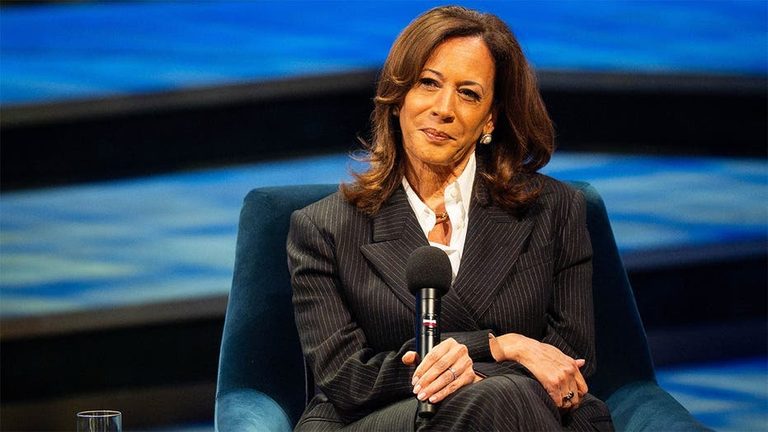
National Democratic figures are openly debating whether former Vice President Kamala Harris should be the party’s top choice for the 2028 presidential nomination. The conversation centers on Harris’s high profile and respect within the party versus a growing sentiment that voters want fresh leadership after the 2024 defeat.
Calls to “move on” from party insiders
Fletcher Smith, a former South Carolina state legislator and Biden 2020 surrogate, told The Washington Post that “people just want to move on.” He added that the party has a “younger generation of people who are capable of leading” – governors, congresspeople, and senators – and suggested Harris should sit out the 2028 cycle to let others try to “save our democracy.”
Respect does not equal guaranteed support
Jamal Simmons, who once served as Harris’s communications director, acknowledged her popularity within the Democratic ranks, saying she is “extraordinarily popular” and “very fond of” among party members. However, he cautioned that respect does not automatically translate into voter support for another presidential bid.
Podcast host and former South Carolina state senator Bakari Sellers echoed the sentiment, noting that Harris is “very talented” but has yet to define what a 2028 campaign would look like for key constituencies. Sellers criticized Harris’s early statements on artificial intelligence, arguing she needs to bolster her appeal among Black men, and pointed out that she has not addressed California’s cost‑of‑living crisis.
Strategic rankings and potential competition
During a recent podcast, Sellers placed Harris second on his personal list of potential 2028 candidates, praising her intelligence but questioning whether her team would “let her be great.” He ranked Maryland Governor Wes Moore as his top choice, describing Moore as the “biggest impediment” to Harris securing the nomination.
Democratic strategist Kaivan Shroff, a veteran of Hillary Clinton’s 2016 campaign, told Fox News Digital that Harris has not presented a new narrative since 2024. He likened a repeat candidacy without fresh ideas to “reapplying to the same college after getting rejected,” suggesting that a newcomer could benefit from introducing themselves to voters for the first time.
Shroff also highlighted Harris’s recent party‑building efforts, such as supporting Michigan candidate Abdul El‑Sayed despite criticism from the state’s far‑left faction. He argued that her influence remains valuable, regardless of whether she runs in 2028.
Mixed signals from Democratic leaders
California Governor Gavin Newsom indicated he would not run in 2028 if Harris entered the race, while former communications director Ashley Etienne warned that Harris would need to distance herself from the Democratic establishment to capitalize on her national advantages.
Virginia State Senator L. Louise Lucas cautioned that moving too quickly away from Harris could alienate long‑time activists, especially Black women who have endured decades of civil‑rights struggles.
Several members of Congress offered non‑committal responses. Senator Richard Blumenthal (D‑Conn.) said he has backed Harris before but expects other contenders this time. Senator Elissa Slotkin (D‑Mich.) predicted a “very, very, very messy” primary with many candidates. Senator Angela Alsobrooks (D‑Md.) emphasized the party’s focus on the 2026 midterms, adding, “I love Kamala Harris. She’s amazing, and anyone who wants to run should. She’s obviously very well qualified. We need to focus on ’26.”
As the Democratic Party navigates its post‑2024 landscape, the debate over Harris’s potential 2028 run underscores a broader strategic question: whether the party should lean on established figures or elevate new leaders to re‑energize its base and appeal to a broader electorate.
Original reporting: Fox News (HLL/CB) — read the source article.