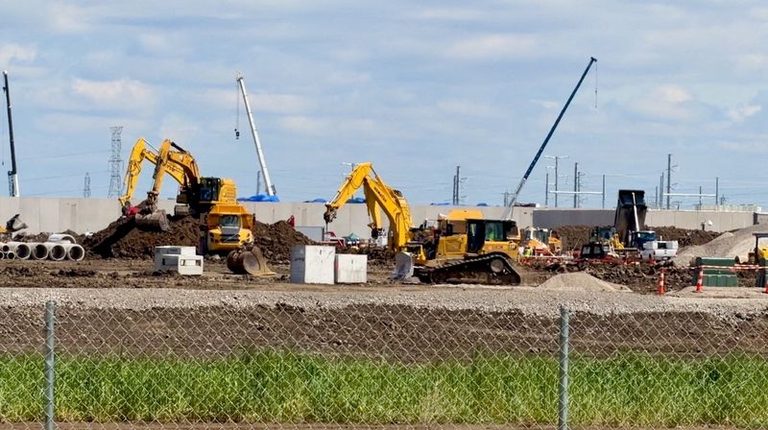
In the small city of Defiance, Ohio, a grassroots effort is set to appear on the November 3 ballot. Voters will decide whether to ban the construction of new data centers that exceed the size of a modest facility. The measure follows months of signature gathering by locals who fear the impact of large AI‑related facilities on farmland, water supplies and the electric grid.
Local concerns drive the initiative
Defiance, a community of about 17,000 surrounded by soybean fields, has not yet attracted a data‑center developer. Yet residents grew uneasy after the county’s economic‑development office fielded inquiries from tech firms. They responded by organizing a petition that now meets the threshold for a ballot measure. City officials have also placed a six‑month moratorium on approving new projects while the debate unfolds.
“Most people feel preyed upon by big business,” said Becca Rupp, founder of Citizens for Responsible Development. Rupp and other activists argue that large data centers would increase electricity demand, strain water resources and threaten the character of rural Ohio.
State‑wide backlash and political implications
The Defiance effort reflects a broader wave of opposition across Ohio and the nation, where voters are increasingly wary of AI‑driven infrastructure. A recent poll conducted by Bowling Green State University on August 31 found that 71% of Ohioans would support a temporary ban on new data‑center construction.
Ohio’s Republican Governor Mike DeWine has responded by suspending new applications for data‑center tax exemptions pending legislative reform, though the state legislature has not acted before the summer recess. The uncertainty surrounding AI development has become a focal point in several high‑stakes races.
Congressional and Senate races turn to data‑center issue
Democratic Representative Marcy Kaptur, who is seeking re‑election in a newly redrawn district that includes Defiance, has made data‑center incentives a centerpiece of her campaign. In television ads she accuses Republican challenger Derek Merrin of supporting tax breaks that shift the cost of massive energy use onto Ohio ratepayers. “Politicians are letting these companies pass the costs of their enormous energy and utility demands onto Ohio ratepayers, then handing them billions in tax breaks to sweeten the deal,” Kaptur said.
Merrin declined to comment, but previously noted that the tax break in question was enacted before his tenure in the Ohio legislature.
The issue also features prominently in the U.S. Senate race between Republican incumbent Jon Husted and former Democratic Senator Sherrod Brown. Brown’s campaign has criticized Husted for supporting AI infrastructure and tax incentives, labeling Husted “data centers’ best friend.” In response, Husted’s team highlighted legislation that would require data‑center operators to cover the cost of additional electricity generation and transmission.
Local advocacy and future policy proposals
Lyn Cox, a leader of the advocacy group Conserve Ohio, said the disclosure of tax subsidies turned scattered zoning disputes into a statewide political conversation. Both major party candidates for Ohio governor have offered proposals to limit tax incentives and require developers to fund their own power infrastructure, while also protecting productive farmland.
Conserve Ohio is pursuing a constitutional amendment for the 2027 ballot that would ban data centers using more than 25 megawatts of power, and is encouraging similar local initiatives across the state.
Tech companies defend their investments
Amazon and Meta, the two firms that have received the most attention, point to billions of dollars in investment and job creation in Ohio. Amazon claims nearly $40 billion has been invested since 2015, while Meta cites more than $2.3 billion since 2018, arguing that their facilities generate tax revenue and economic development.
Nevertheless, many residents, like Becca Rupp, view the debate as a test of whether elected officials will prioritize small‑town America over big‑tech interests. “This is definitely a breakdown between what government was supposed to do for small America and what it has failed to do for small America,” she said.
Original reporting: Appleton, WI News Feed (HLL/CB) — read the source article.