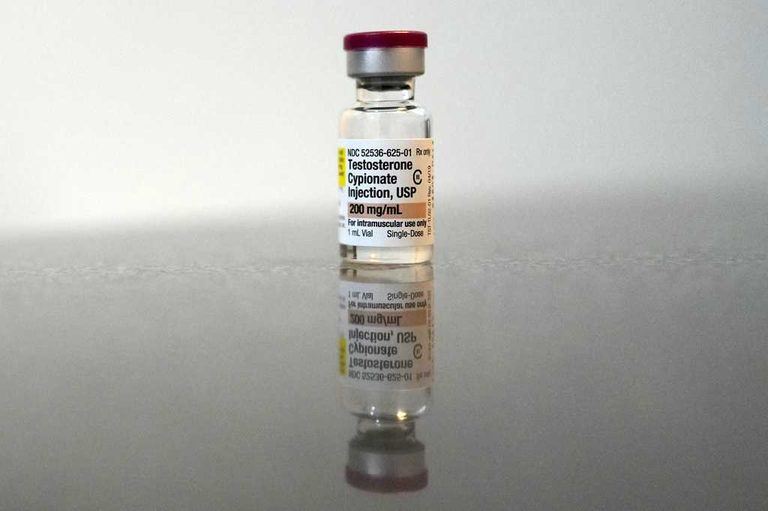
Defense Secretary Pete Hegseth announced plans to test U.S. service members’ testosterone levels each year, starting with those aged 30 and older. Hegseth stated that this initiative aims to restore and optimize natural capabilities, protecting longevity and ensuring a biological foundation required to sustain the fight.
What is Testosterone Replacement Therapy?
Testosterone replacement therapy, also known as TRT, involves taking external forms of testosterone to increase a person’s natural levels. It can come in many forms, including patches, injections, pellets, pills, and creams or gels. The treatment can vary from patient to patient, depending on what form of testosterone is prescribed.
According to Dr. Ravi Iyengar, an endocrinologist at UC San Diego Health, the best candidates for TRT are people with lab-confirmed low testosterone and actual deficiency symptoms. However, Iyengar emphasized that the first goal as endocrinologists is always to help the body produce its own testosterone if possible, as there are significant implications to taking outside hormones.
Risks and Benefits of Testosterone Replacement Therapy
The benefits of TRT for people with a testosterone deficiency include improved symptoms, restored energy, protected bone density, supported healthy metabolic function, and improved libido and sexual health. However, there are also risks associated with TRT, such as infertility, sleep apnea, acne, prostate growth, and breast tenderness or enlargement.
Original reporting: 40/29 / KHBS (NW Arkansas) — read the source article.