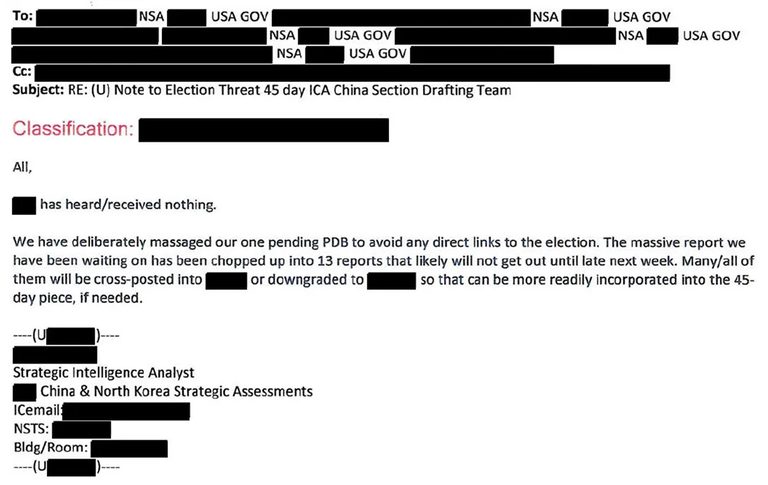
Newly declassified documents reveal that America’s election systems are vulnerable to foreign cyberattacks and espionage. The documents, released by the White House, show that U.S. spy agencies have long judged that major adversaries, including Russia, China, Iran, and North Korea, have the tools to break into election infrastructure.
Election Security Risks
The documents confirm that centralized databases holding voter rolls, poll books, and election websites are particularly weak points. One newly declassified report explicitly warns that adversaries have the means to disrupt or manipulate U.S. elections. During the 2020 cycle, Chinese actors obtained personal information on roughly 220 million American voters, including names, addresses, phone numbers, and even political preferences.
The White House counters that the sheer scale of the breach matters and that full details were not shared openly or briefed comprehensively to top leaders and Congress at the time. The point is not whether a previous election was manipulated or compromised; the point is whether the nation’s current infrastructure can effectively stop foreign election interferences in a future election.
Non-Citizens Registered to Vote
A Homeland Security report found that about 278,000 non-citizens are registered to vote in just four states who cooperated with the Department of Justice’s request for voter information. Real numbers are likely higher because many states did not fully share data. The documents also reveal that mail-in voting is a particular weak point, with bipartisan commissions and academic studies flagging absentee ballots as one of the highest-risk areas for fraud due to verification challenges.
Vice President JD Vance and others urge Congress to pass reforms such as the SAVE America Act, which would require voter ID and proof of citizenship for federal elections. The White House also published a list of favorable reactions from political leaders and media, including CIA Director John Ratcliffe and former officials like former National Security Advisor Robert C. O’Brien.
Original reporting: Must Read Alaska (Anchorage) — read the source article.