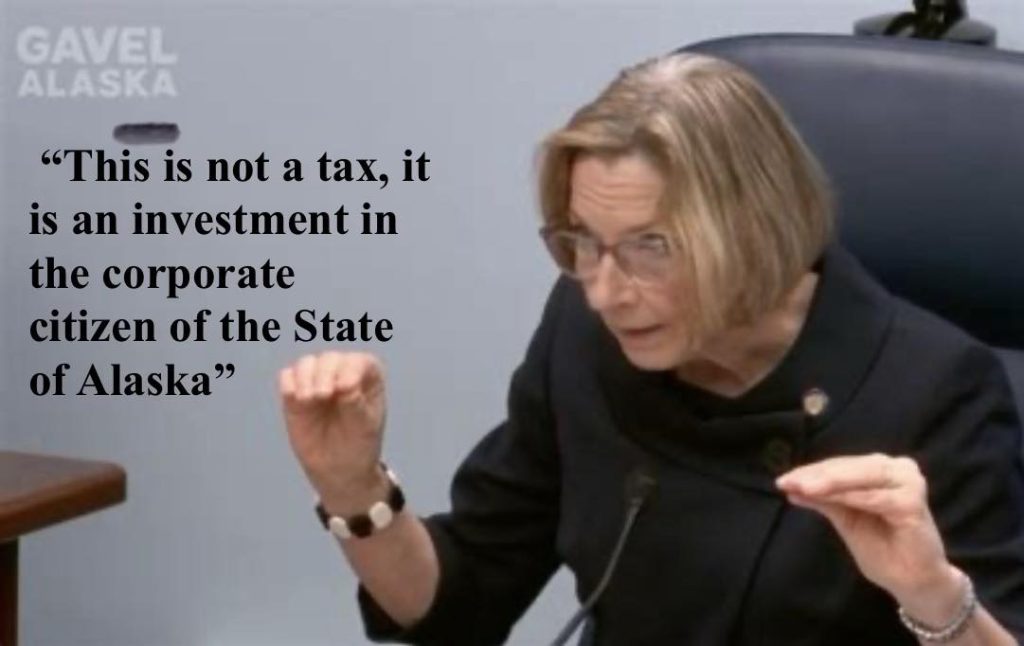
In recent discussions about taxing S-corporations involved in the Alaska LNG project, Senators Cathy Giessel and Bill Wielechowski referred to corporations that pay state income taxes as ‘good corporate citizens.’ This statement has sparked a debate about the implications of such a designation and its potential impact on Alaskan policy.
Corporate Citizenship and Taxation
The idea that a corporation could be considered a citizen is controversial. In the United States, citizenship is a status reserved for individuals, not entities. However, Giessel and Wielechowski’s comments suggest a broader interpretation, one that could imply a push toward treating corporations as a new class of citizens. This raises concerns about the potential for unequal treatment under the law.
According to the senators, a ‘good corporate citizen’ pays state income tax. This notion could lead to arguments that all Alaskans should pay state income tax, aligning with a more socialist framework where wealth is redistributed from corporations to individuals. Critics argue that this could create a system where corporations are unfairly burdened compared to individual citizens.
Implications of Corporate Citizenship
The concept of corporate citizenship is often associated with left-wing politics and the ESG (Environment, Social, Governance) movement. ESG encourages corporations to adopt practices that prioritize environmental and social justice issues, sometimes at the expense of traditional profit motives. This approach is seen by some as a way to advance socialist ideals under the guise of corporate responsibility.
While proponents argue that corporate citizenship can lead to positive outcomes, such as improved environmental practices and social equity, opponents see it as a threat to free-market principles. They argue that it could increase the cost of living and expand government control over private enterprise.
Conclusion
The debate over corporate taxation and citizenship in Alaska highlights broader ideological divides about the role of government and business in society. As discussions continue, Alaskans will need to consider the potential consequences of adopting policies that could reshape the state’s economic landscape.
Original reporting: Must Read Alaska (Anchorage) — read the source article.