After three days of deliberation, the federal jury in the United States District Court for the District of Columbia reported it could not reach a unanimous verdict in the bribery trial of Ward 8 Councilmember Trayon White. The deadlock was announced on September 25, and Judge Rudolph Contreras instructed jurors to continue reviewing the evidence.
Community reaction and calls for justice
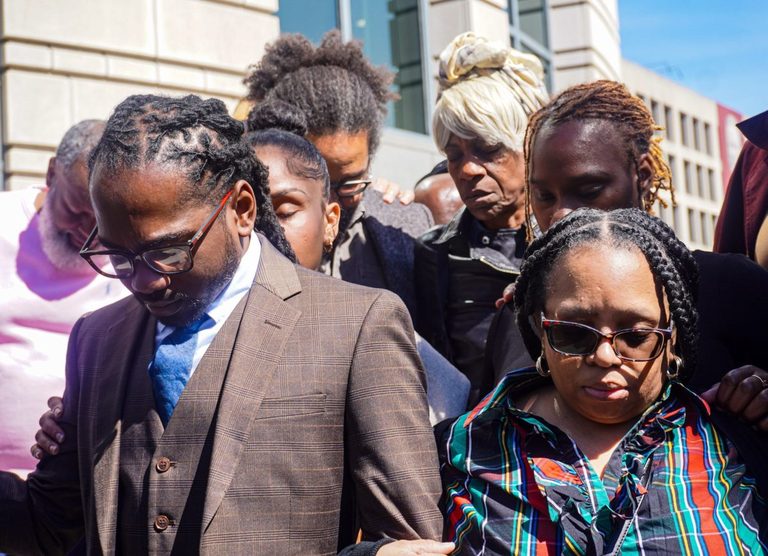
Local residents gathered outside the courthouse, voicing confidence that White will be found innocent. Ward 7 resident and community advocate Leniqua’dominique Jenkins told The Informer that hearing both sides in person changed her perspective. “People who haven’t been in the courtroom to hear both sides of the story have been missing facts and evidence,” Jenkins said.
Jenkins, a sister and daughter of returning citizens who has hosted book clubs in federal prisons, emphasized that the trial’s public record offers a fuller picture than the redacted online reports that many claim are biased.
Trial details and legal arguments
The prosecution centered on FBI recordings of White’s conversations with confidential human source Allieu Kamara, who the defense identified as White’s brother‑in‑law. Assistant U.S. Attorney Rebecca Ross argued the recordings showed White “stuffing envelopes of cash” and agreeing to extend a contract for Kamara’s business, Life Deeds, in exchange for money.
White’s defense, led by attorney Warren G. Kohlman, countered that the recordings do not demonstrate corrupt intent. Kohlman told jurors that no witness described a corrupt act and that the evidence fails to prove White intended to receive a bribe. He also highlighted testimony from former D.C. grants supervisor Anwar Walker, who said he never met with White, underscoring the lack of a direct link between the alleged gift and official action.
Legal complexities
The case hinges on the definition of bribery under 18 U.S.C. § 201, which requires a public official to receive a benefit in exchange for an official act, and the prosecution must prove “corrupt intent.” Jurors asked whether a contract extension for Kamara’s business would constitute a bribe and whether the receipt of gifts under the D.C. Code of Conduct violated official duty.
Judge Contreras acknowledged the difficulty of the statute, noting that the law’s language can be challenging for jurors to apply. He deferred to the prosecution’s request to continue deliberations rather than declare a mistrial at this stage.
White’s response and community support
Councilmember White thanked supporters gathered near the courthouse, saying, “I’ve seen a lot of people in my situation that never left these doors. The amount of love and support I’ve received from this region has been second to none. I’m forever indebted, and I’m forever grateful.” He added that the council remains patient and hopeful while the legal process continues.
White also noted his recent public service activities, including a ribbon‑cutting ceremony for the newly modernized Malcolm X Elementary School and participation in a D.C. Council breakfast meeting on policy matters.
Looking ahead
The jury’s deadlock means the trial will resume, and the court will determine whether a mistrial is warranted or if further deliberation can produce a verdict. Both the prosecution and defense remain prepared to present additional arguments on the elements of bribery and the presence—or absence—of corrupt intent.
For residents of Ward 8 and the broader D.C. community, the outcome of this trial will have implications for public trust in elected officials and the enforcement of federal anti‑bribery statutes.
Original reporting: The Washington Informer — read the source article.