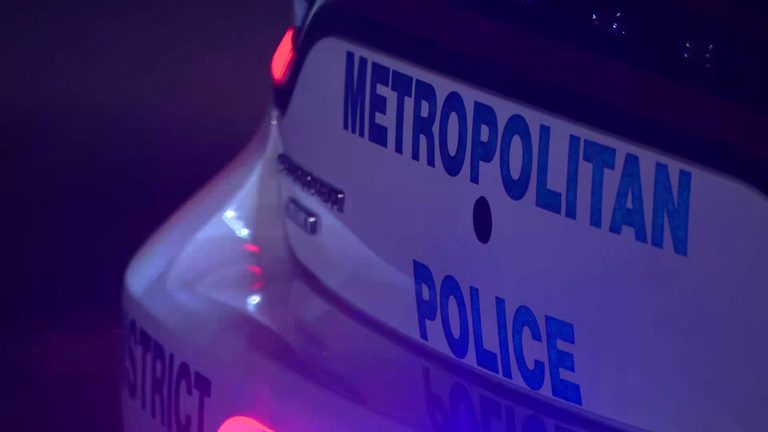
The D.C. Police Complaints Board (PCB) issued a new report Tuesday calling for changes in how Metropolitan Police Department (MPD) officers enforce the District’s vehicle window‑tint regulations. The independent accountability agency, which investigates public complaints of police misconduct, found a pattern of officers issuing citations or initiating traffic stops without first measuring the tint level.
Current law and MPD policy
Under D.C. law, front windshields and front side windows must allow at least 70% light transmittance, while rear windshields and rear side windows must allow at least 50% transmittance. Violators face a $50 fine and must prove the tint was removed within five days to avoid additional penalties or registration suspension. MPD policy requires officers to use a tint meter to determine whether a vehicle is out of compliance before issuing a citation.
Findings of the PCB report
The board’s analysis of multiple cases revealed that officers frequently cited drivers for alleged tint violations without ever testing the windows. In several instances, officers incorrectly told drivers that any front‑windshield tint is illegal, contrary to the law’s allowance for up to 70% light transmission.
One documented case involved an officer stopping a driver for a suspected tint violation, then immediately questioning the driver about contraband and conducting a pat‑down search. The officer never measured the tint level, later stating she believed front‑windshield tint was illegal and therefore did not need to test it.
Another case described an officer who, after pulling over a driver for a suspected tint issue, detained the vehicle for more than an hour while waiting for a K‑9 unit to sweep the car. The board sustained a complaint of unlawful detention, noting the stop far exceeded the time needed to address a simple traffic infraction.
Board’s recommendations
Marke D. Cross, executive director of the Office of Police Complaints, said, “Window‑tint enforcement must be based on the law and supported by proper training and equipment. Clear guidance will help officers apply the law consistently, reduce unnecessary police contact, and strengthen public confidence.” The board recommends that MPD adopt the following actions:
- Require the use of calibrated tint meters for every alleged violation.
- Provide updated training that emphasizes the specific light‑transmittance thresholds in the D.C. code.
- Issue written guidance clarifying that front‑windshield tint is permissible up to 70% light transmission.
- Implement oversight mechanisms to ensure compliance with the new procedures.
MPD response
FOX 5 reached out to the Metropolitan Police Department for comment. The department has indicated it will review the PCB’s findings and consider the board’s recommendations, emphasizing its commitment to fair and lawful traffic enforcement.
Why this matters to D.C. residents
Consistent, law‑based enforcement protects motorists from unwarranted stops and helps maintain trust between the police and the community. By ensuring officers measure tint levels before issuing citations, the MPD can avoid unnecessary detentions that disproportionately affect neighborhoods with historically higher police contact.
The PCB’s report underscores the importance of accountability and transparent policing—principles that align with the District’s long‑standing commitment to protecting individual liberty and upholding the rule of law.
Original reporting: Arlington County | FOX 5 DC — read the source article.