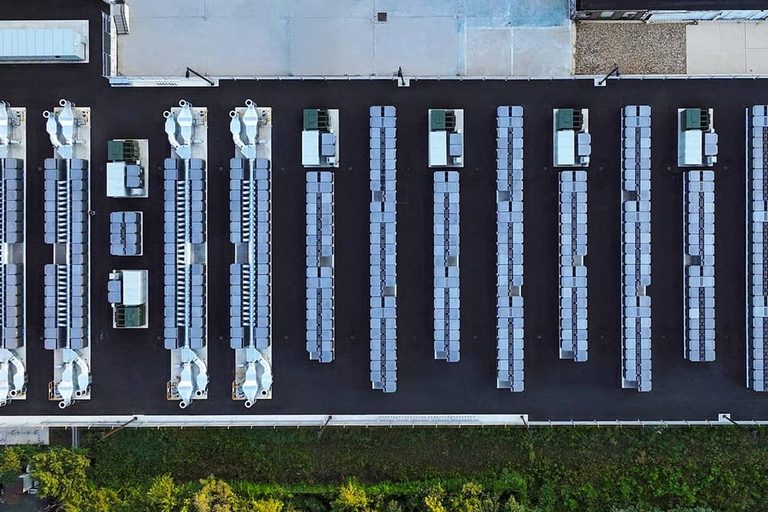
Data center construction is accelerating to keep pace with AI, and communities nationwide are increasingly concerned about the impact on them. A survey of U.S. data center operators found that nearly 30% of developers report increased community scrutiny on their projects.
Community Concerns
More than 70% of Americans oppose AI data centers being built near their homes, according to a Gallup survey. Communities are concerned about rising local electricity prices, air and noise pollution, and the strains data centers may cause on their water resources and power grid reliability.
Onsite power means physically creating power at the location where it’s used. Examples include fuel cells as well as natural gas engines and turbines. Onsite power sources vary in their emissions outputs, noise levels, and water use.
Benefits of Onsite Power
Onsite power can stabilize electricity prices and bolster grid reliability. Some data centers use onsite power to generate all of their electricity, meaning they’re not connected to the power grid and don’t impact nearby residents’ electricity bills or grid stability.
Onsite power can also reduce strain on local transmission and distribution infrastructure and serve large loads without relying on the grid. This means these data centers don’t increase the risk of blackouts or grid instability for nearby residents, even during severe weather.
Onsite power can also reduce water consumption and decrease carbon emissions. Data center developers are making widespread efforts to reduce their water usage, and some onsite power technologies can play a significant role in reducing or eliminating excess water consumption.
Original reporting: KTVZ (Central Oregon) — read the source article.