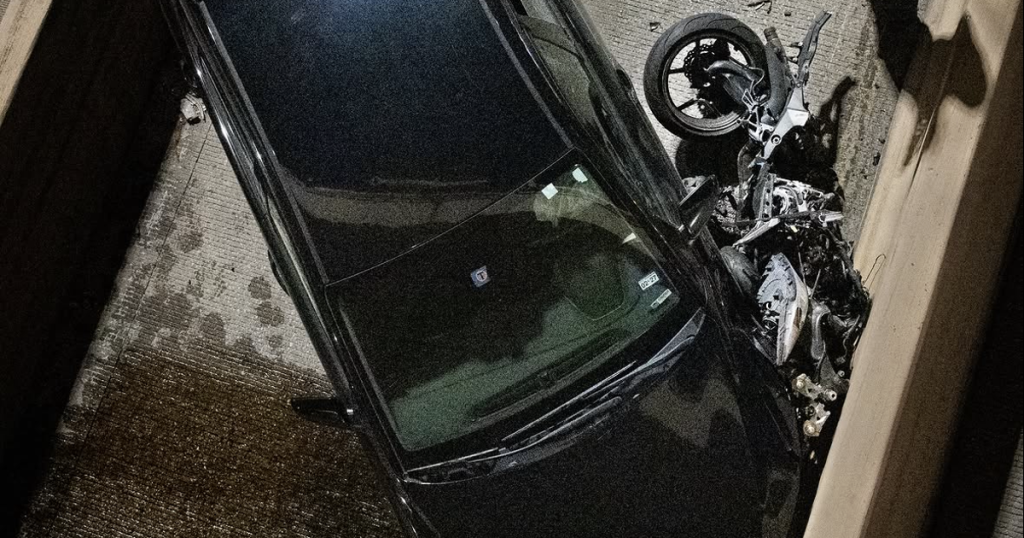
Dallas police say a motorcyclist died after striking the HOV wall and then being hit by a trailing car on North Central Expressway near the Midpark Road bridge, in an incident that closed southbound lanes for hours on the night of May 13, 2026; the short caption in the original material names Terry Van Sickle. Authorities responded around 9:15 p.m., investigated the single-lane HOV entry where the rider lost control, and pronounced the motorcyclist dead at the scene. The identity of the deceased has not been released pending family notification, and investigators are still piecing together the moments leading up to the collision.
Dallas police say the crash unfolded when the rider was entering the HOV lane and struck the concrete wall at the entrance, which sent him crashing inside the narrow single-lane entry. A car traveling just behind the motorcycle then struck both the rider and the bike, compounding the severity of the incident. Paramedics pronounced the motorcyclist dead on the scene while the driver of the trailing vehicle reported no injuries.
Traffic cameras and eyewitness accounts helped first responders map the sequence of events, though investigators stressed the examination was ongoing as they collected physical evidence. The exact reasons the motorcyclist hit the wall remain under investigation, with officials looking at speed, road conditions and any possible mechanical issues. Police are conducting interviews and reviewing footage to determine whether any charges or citations will follow.
All southbound lanes and the HOV lanes on Central Expressway were shut down for more than four hours during the probe, snarling evening traffic and prompting detours across adjacent streets. Commuters and nearby businesses reported lengthy delays as crews worked to clear the scene and preserve evidence. The lanes have since been reopened, but the closure left a sharp reminder of how quickly a single crash can ripple through a city’s commute.
Authorities did not release the rider’s name while next of kin were being notified, a standard step in fatal crash protocol that can delay public identification. That withholding is not unusual, but it feeds the uncertainty families and communities feel in the hours after a tragic collision. Dallas police asked anyone with additional video or eyewitness information to come forward to help complete the timeline.
Witnesses at the scene described a sudden, chaotic moment when the motorcycle collided with the barrier, followed almost immediately by the impact from the car behind. Such rear-end secondary collisions are often catastrophic for riders, who have far less protection than occupants of a vehicle. Emergency crews prioritized stabilizing the scene and preserving evidence while also attending to any medical needs.
Investigators will consider the layout of the HOV entrance, signage and lighting as part of their assessment, since design factors can influence how drivers and riders negotiate an onramp. The investigation will also review vehicle data if available, along with any cellphone or dashcam footage that might show the moments before the crash. Officials said they are not ruling out any contributing factors until the review is complete.
The driver of the car involved was interviewed at the scene and reported no physical injuries, according to police, but traumatic effects from being involved in a fatal crash can persist. Police will determine whether the driver’s actions were avoidable or if the crash was unavoidable given the circumstances. Any legal or civil consequences will follow after investigators deliver their findings to prosecutors and insurers.
Dallas police identified themselves as the source of the information released about the incident and emphasized the ongoing nature of the inquiry into what caused the motorcycle to strike the wall. The community’s interest has been high given the location on a busy stretch of Central Expressway and the late evening timing that affected commutes. Officials continue to gather evidence and urged anyone with relevant footage to contact investigators to help close gaps in the timeline.