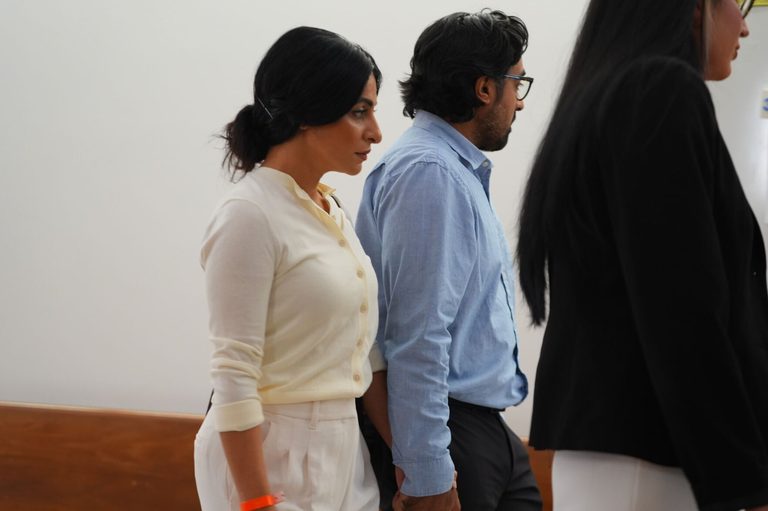
A Texas district court in Dallas became the stage for a deeply personal legal battle on Tuesday as Nausheen Gilkar and her husband, Omar Ahmed, testified alongside surrogate McKenna West. The couple, who traveled from California, are seeking full parental rights to their newborn, whom they have named Rumi, while West, a nurse from Alaska, is fighting for sole conservatorship to make medical decisions for the child.
Medical emergency fuels the dispute
The infant was born on Aug. 12 with hypoplastic left heart syndrome, a rare congenital defect that leaves one side of the heart underdeveloped. Fewer than 1,000 newborns in the United States face this condition each year, and without immediate surgery the prognosis is often fatal within days or weeks. Gilkar told the court that Rumi’s condition has worsened since birth, describing episodes of gasping for air, choking on tubes, and a need for blood transfusions.
Surrogate’s claim centers on aborted pregnancy request
West testified that she was 23 weeks pregnant when the couple urged her to obtain an abortion after learning of the diagnosis. She said she was uncomfortable with the request but complied with the appointment. West argues that because the couple asked her to terminate the pregnancy, they have not demonstrated a commitment to providing the life‑saving surgeries the child will need. Her attorneys are seeking sole conservatorship, asserting that she should be the one to decide on medical treatment.
Couple’s legal stance
Gilkar and Ahmed maintain that they entered the surrogacy contract in August 2025 after multiple rounds of in‑vitro fertilization in Los Angeles, during which Gilkar underwent a hysterectomy. They claim West violated the contract by refusing to guarantee the baby’s post‑natal care and by attempting to claim custody. The couple obtained a restraining order after the birth, barring West from seeing or holding the child, and that order remains in effect.
Judicial outlook
The judge did not issue a final ruling on custody or conservatorship during Tuesday’s hearing, leaving the restraining order intact while the case proceeds. Court documents filed by the couple’s attorney reference a prior California ruling that West has no legal or physical custody rights, a decision West hopes the Texas judge will overlook.
Broader implications
This case underscores the complex intersection of surrogacy contracts, parental‑rights law, and abortion policy in a state where most abortions are banned. Right‑to‑life groups and conservative lawmakers have rallied behind West, framing the dispute as a matter of protecting unborn life and honoring contractual obligations. Legal experts note that surrogacy is not regulated at the federal level, leaving each state to interpret contracts and parental‑rights claims, which can result in divergent outcomes.
As the hearing continues, both parties stress their love for the child and their desire to secure the best possible medical care, while the courtroom remains a battleground for broader cultural and legal debates.
Original reporting: KTBS 3 (Shreveport) — read the source article.