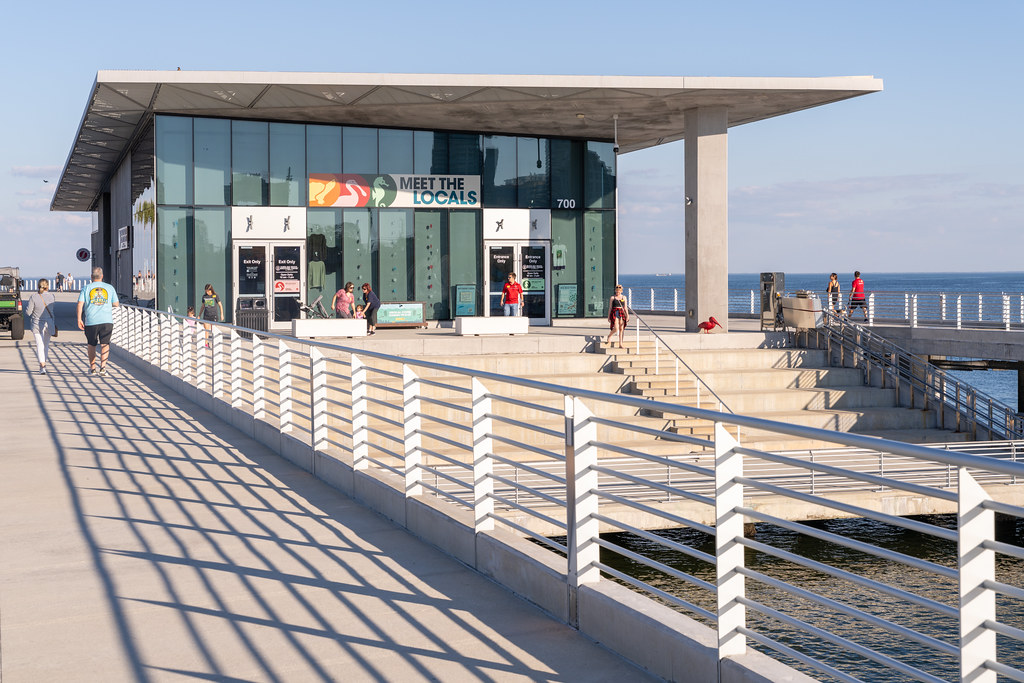
On a Tuesday morning in late October, a pelican lands on the dock railing outside the Tampa Bay Watch Discovery Center in Safety Harbor and holds its position for a solid ten minutes, unbothered by the small group of visitors filing past. Nobody shoos it. The staff barely glances up. This is that kind of place.
The Discovery Center sits at the end of Philippe Parkway, right on the edge of Old Tampa Bay, inside a modest waterfront building that shares a campus with the city marina. It is operated by Tampa Bay Watch, a nonprofit that has been doing real coastal restoration work in the bay since 1997 — replanting seagrass beds, installing oyster reef structures, running water quality monitoring. The Discovery Center is the public-facing piece of that mission: a hands-on exhibit space where visitors can actually engage with what the restoration work looks like and why it matters.
Inside, it is not a large space. The main room holds several touch tanks — horseshoe crabs, sea urchins, small stingrays — along with display panels and interactive stations explaining the bay’s ecosystem. A naturalist is almost always on the floor, willing to talk. On this particular morning, a staff member spent fifteen minutes explaining the life cycle of the blue crab to a pair of kids who seemed genuinely riveted. The tanks are well-maintained and the animals visible; this is not the kind of display where everything retreats to a corner.
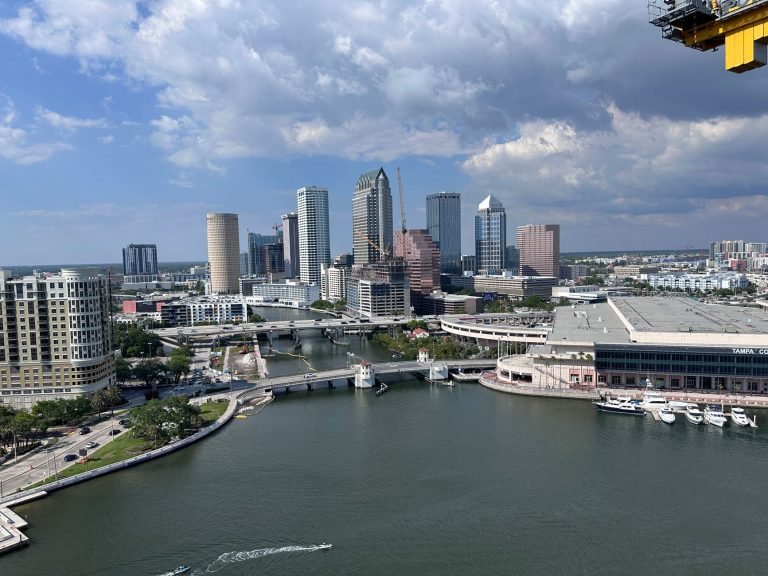
What separates this from a standard aquarium visit is the context. The exhibits constantly point back out the window — to the actual bay, to the actual seagrass beds visible just offshore at low tide, to the osprey working the surface thirty yards from the dock. It does not feel like a simulation. A short boardwalk extends out over the water, and on clear days the view stretches across to the Courtney Campbell Causeway corridor. The marina beside it is active with small boats and a few kayak rentals, so there is ambient life in every direction.
The center is free to enter, though donations are accepted and Tampa Bay Watch relies on them. Parking is easy — the marina lot is rarely full on weekday mornings. Weekend afternoons draw more families, particularly after school field trip season kicks in around November, and the touch tanks can get crowded. A Tuesday or Wednesday mid-morning visit is quieter and the staff has more room to engage.
From Safety Harbor, it is a short drive into downtown along Main Street, which has a handful of decent lunch spots. But the Discovery Center itself is the point — not a stop on the way to something else. It works best for people who want to understand what Tampa Bay actually is, biologically and ecologically, rather than just look at it from a distance.
The pelican eventually lifted off the railing, circled once over the dock, and disappeared toward the center of the bay. Somewhere out there, there is a seagrass bed that Tampa Bay Watch planted ten years ago. The center will tell you exactly where, and why that matters.