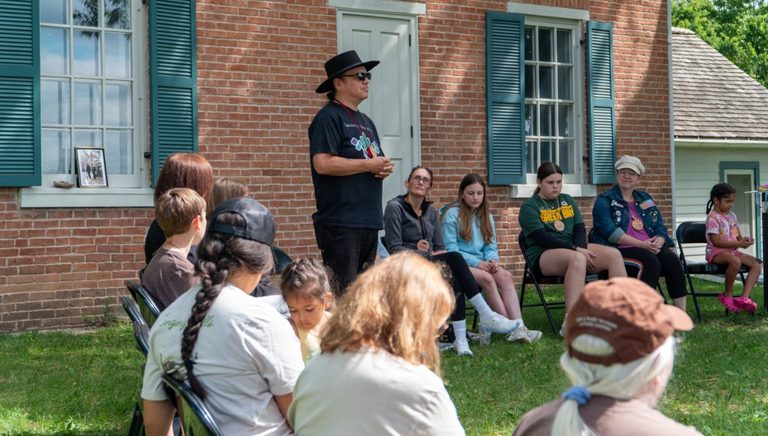
The city of Bloomington, in collaboration with the University of Minnesota Dakota Language Program, has been hosting Dakota Language Camp almost every year since 2008. For participants — a mix of about 30 kids and adults, most of whom are not Dakota — the three-day camp provides an introduction to the Dakota language and a window into the ways language can shape a worldview.
Dakota Language and Culture
Neil McKay, a Dakota language instructor at the University of Minnesota, said that the language is like an interpretive guide for the land, and the land’s the interpretive guide for the language. The camp has been held almost every year since 2008, though there have been some exceptions, like during the COVID-19 pandemic.
The camp takes place at the historic Pond-Dakota Mission Park, the 19th-century homestead of missionaries Gideon and Agnes Pond. It is the site of a mission, which is used to Christianize Dakota people, but they also did take care of and protect a group of Dakota families after the 1862 war, when other Euro Americans wanted to either kill or ethnically cleanse Dakota people from Minnesota.
Participants broke into small groups to practice Dakota language skills, including asking each other what they were eating and playing the board game “Guess Who,” using clothing vocabulary. Inside the Gideon and Agnes Pond House, McKay led the campers in a game of “What Eats What,” introducing animal vocabulary.
Community Involvement
Sheyenne Tereshko, an enrolled tribal member who does not speak the language, came to the camp from Wisconsin with her kids after seeing a flyer on Facebook. She said she appreciated learning about Dakota word order and sentence structure, and being able to practice challenging sounds.
The camp’s beautiful natural surroundings overlooking the Minnesota River Valley also play a key role in teaching Dakota language and culture. Eileen Bass, one of the camp’s instructors, said one of her favorite parts of the camp was exploring language as part of a river walk, learning different Dakota terms for trees.
Original reporting: Sahan Journal — read the source article.