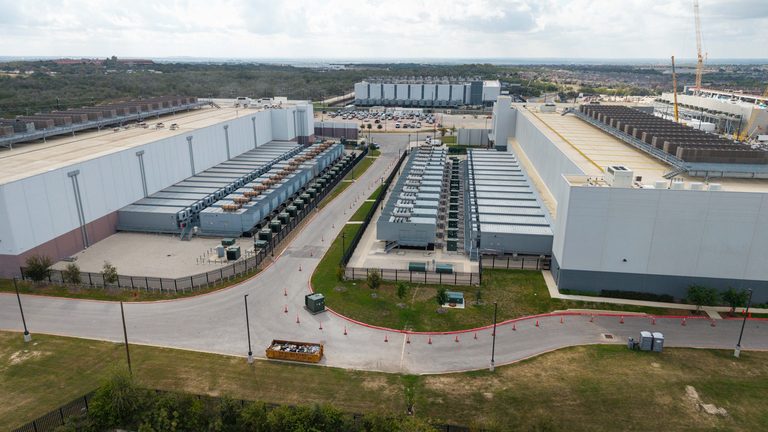
In a first‑of‑its‑kind media event, data‑center developer CyrusOne allowed reporters and elected officials inside its high‑security Omicron Drive campus on the Northwest Side of San Antonio. The tour was intended to demystify the massive, windowless facilities that have become a prominent feature of the Texas Research Park.
Why the tour matters
Texas leads the nation in data‑center construction, with rows of industrial‑style warehouses popping up next to neighborhoods and farmland. Critics have voiced concerns about the secrecy surrounding these sites, the strain on local water and power supplies, and the potential impact on nearby residents. By opening its doors, CyrusOne hopes to counter misinformation and demonstrate responsible stewardship of digital infrastructure.
What visitors saw
After signing electronic confidentiality forms and receiving red visitor badges, the group entered a gray‑and‑white lobby where a company spokeswoman reminded attendees that conversations were “off the record” and only exterior photographs were permitted. Security officers checked IDs behind glass, underscoring the facility’s strict access controls.
The tour proceeded down brightly lit corridors lined with galvanized steel ductwork and fiber‑optic cabling. Although the double doors to the actual data halls were only opened enough for a brief glimpse, the guide explained that the 87,500‑square‑foot SAT 5 center relies on a closed‑loop cooling system and a dual fire‑suppression setup—one using water, the other air—to protect its equipment.
Senior Director of Operations Robert Orms led visitors to a second‑level control room where staff monitor power and cooling on a wall of screens. Among the team were a U.S. Navy veteran and a former HVAC technician, highlighting common career pathways in the industry.
Noise, power and community impact
Outside the building, rows of 2.25‑kilowatt generators sit in sound‑attenuated enclosures, operating only intermittently during daytime hours. Roof‑mounted chillers are similarly equipped with sound walls, and the company conducts regular noise testing at fence lines to minimize disturbance.
Orms also pointed out a nearby electrical substation that CyrusOne built and later transferred to CPS Energy, providing reliable power to both the data center and surrounding neighborhoods. The master‑planned Texas Research Park, zoned for heavy industrial use, offers ready access to power and fiber, making it attractive for further data‑center development.
Local officials join the conversation
In addition to journalists, the tour welcomed San Antonio council members Ric Galvan (District 6) and Phyllis Viagran (District 3), as well as other community leaders. The company’s spokeswoman noted that CyrusOne has previously hosted residential neighbors through the homeowners association, aiming to build goodwill and address concerns directly.
“We build digital infrastructure responsibly and want people to know about it,” said Katy Hancock, CyrusOne’s spokesperson. “Transparency and early engagement with communities around electricity, water and noise, as well as benefits like jobs and tax revenue, are essential.”
Industry context
CyrusOne, the nation’s seventh‑largest data‑center operator by capacity, serves more than 925 customers worldwide, including government agencies, financial firms, health‑care systems and streaming services. The company owns or plans over 100 facilities across Europe, the Far East and the United States, with 15 sites in Texas alone.
Other developers, such as Denver‑based Vantage, are also expanding in the San Antonio area, filing plans for a 96‑megawatt data center on a 50‑acre parcel. As the sector continues to grow, industry reports stress the importance of community outreach, job creation and tax contributions to gain local acceptance.
The hour‑long tour concluded with Hancock emphasizing CyrusOne’s commitment to openness. “We’re proud of what we do. We don’t have anything to hide. The less we let people in, the more speculation and concern grow,” she said.
Original reporting: San Antonio Report — read the source article.