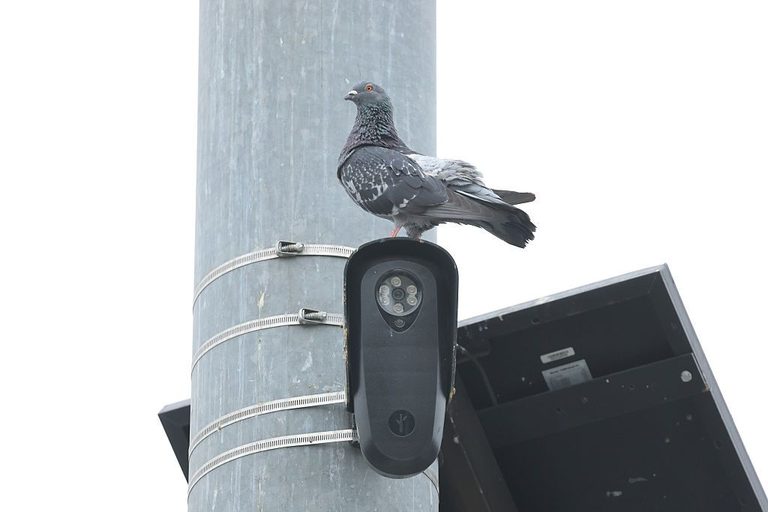
On Saturday, a convoy of cyclists gathered in downtown Indianapolis and pedaled a seven‑mile route to Monument Circle, staging a protest dubbed “Pedaling for Privacy.” The riders, led by local activist Tony Katz, called for the immediate removal of the city’s Flock automated license‑plate readers, arguing that warrantless surveillance violates the Constitution and threatens family privacy.
Local activists demand action
Katz, a frequent commentator on WIBC 93.1 FM, told participants that government‑run cameras “crossed the line” and that city officials must act before the technology “worsens.” He emphasized that surveillance without a warrant is “simply unacceptable,” and rejected the notion that citizens should sacrifice their rights to make police work easier.
“Surveillance by our government is wrong. Surveillance of the citizen is always wrong,” Katz said during the rally. He warned that similar systems across the country have been misused for personal snooping, citing examples where officers accessed camera data for non‑law‑enforcement purposes.
Calls for removal, not vandalism
While urging city leaders to dismantle the cameras, Katz made clear that he does not condone vandalism or vigilantism. “Cities should be ripping these things out by the root and saying, ‘We don’t do that here,’” he said, urging a lawful, policy‑driven response rather than illegal actions.
The protest also addressed misconceptions linking opposition to Flock cameras with broader anti‑technology sentiment. When a listener suggested that supporting AI data centers meant supporting surveillance, Katz drew a line, stating that backing data centers is about maintaining U.S. competitiveness against China, not endorsing domestic monitoring.
“My supporting of AI data centers is the recognition that the fight is on with China and we simply cannot lose the fight,” he explained. “So no, supporting a data center is not supporting a Flock camera.”
Why the issue matters to Indianapolis families
For many residents, the debate touches core concerns of parental rights and personal liberty. Automated license‑plate readers can track vehicle movements without notice, raising questions about how long data is stored and who can access it. Families worried about their children’s safety and privacy see the technology as an overreach that could erode trust between law‑enforcement and the community.
Local officials have not yet announced a formal vote on the cameras, but the protest adds pressure for a transparent review. City council members are expected to discuss the matter at their next meeting, where they may consider ordinances limiting the use of warrantless surveillance tools.
How to stay informed
Listeners can hear Katz’s full commentary on weekdays on WIBC 93.1 FM or stream the segment online. Community members who wish to voice their opinions are encouraged to attend the upcoming city council session or submit written comments to the Indianapolis mayor’s office.
Original reporting: 93.1 WIBC (Indianapolis) — read the source article.