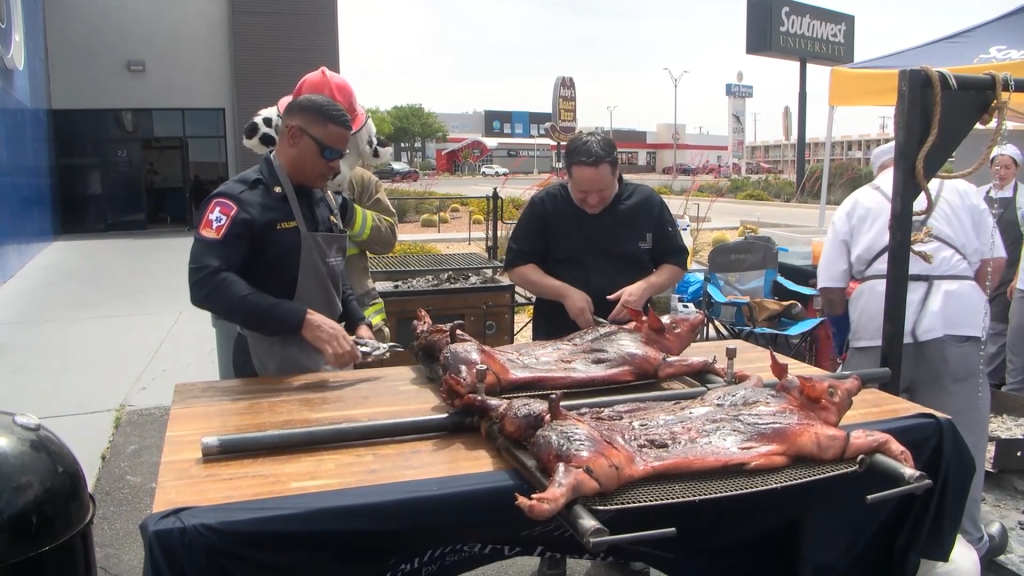
The Culinary Institute at Southwest University served up a hearty, gratitude-filled lunch for El Paso firefighters on Firefighter Appreciation Day, letting students show off their skills while the department accepted the community’s thanks. The event mixed serious training with real-world service, giving culinary students a chance to feed those who run toward danger and letting the fire department feel appreciated for the risks they take every day.
On a clear Monday, a stream of uniformed firefighters moved through tables laid out with freshly prepared dishes. The students in the culinary program had spent time planning menus, cooking to scale, and timing service so everything arrived hot and ready. It wasn’t a classroom exercise alone; it was a practical stretch that tested organization, speed, and the ability to deliver under pressure.
Southwest University Vice President Jeremy Burciaga explained that the meal was designed to highlight what students learn in the culinary program. The menus reflected techniques taught in class, from proper seasoning and plating to safe food handling and volume production. For the students, it was an encouraging moment—an opportunity to translate study into something tangible and appreciated by a grateful crowd.
Firefighter Appreciation Day is more than a calendar note; it’s a community ritual that recognizes public servants who face danger to protect others. The El Paso Fire Department’s presence made the connection clear: training and preparation matter both in the kitchen and in emergency response. The event offered firefighters a pause for fellowship, a chance to recharge, and a visible reminder that their work does not go unnoticed.
Organizing food for first responders requires attention to detail, and the students rose to the occasion. They balanced flavors that travel well, arranged service lines for quick flow, and coordinated with staff to keep everything sanitary and efficient. The logistical lessons—timing plates for hot service, managing portions, and communicating under a deadline—mirrored the real-world demands chefs face every day in busy kitchens.
For the firefighters, the meal was a welcome break from the routine and an act of community solidarity. Even simple comforts like a warm plate and a thoughtful presentation can lift morale after a long shift. Events like this deepen ties between institutions and citizens, showing how local schools and public services can work together to build goodwill and resilience.
Faculty and staff watching the students work saw the payoff of hands-on learning. Classroom theory met practical execution as students adapted to changing conditions and kept service moving smoothly. The feedback loop—students getting immediate reactions from those they fed—helped reinforce lessons that no textbook alone could deliver.
Beyond feeding a hungry crew, the event underscored a broader lesson about civic responsibility and practical education. When training programs create real-world opportunities, students gain confidence and communities gain tangible benefits. It’s an easy win: culinary students sharpen their craft, firefighters enjoy a thoughtful gesture, and El Paso gets a moment of shared appreciation.