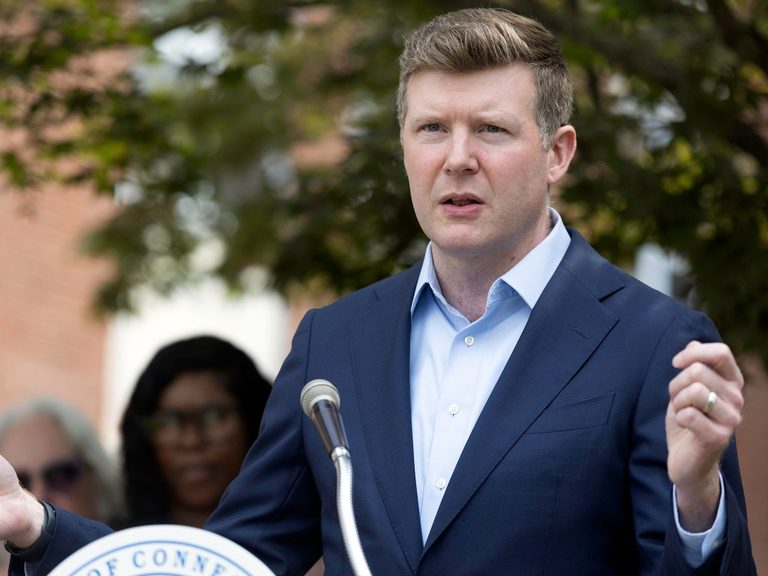
Connecticut’s special‑education programs are facing a $96 million funding shortfall this school year, and Comptroller Sean Scanlon says the state’s fiscal guardrails are a major cause. The Democratic‑leaning Guilford official warned that the budget‑cap system, which has funneled billions into pension debt repayment, leaves local districts scrambling to meet federal mandates for special‑education services.
Guardrails divert money from schools
Since 2017, Connecticut’s budget caps have produced surpluses averaging nearly 9 % of the General Fund, far above the historic 0.1 % average of the prior two decades. While the surplus has helped pay down more than $30 billion in pension obligations and build a $4.5 billion rainy‑day fund, Scanlon argues the caps have also forced the state to cut education spending.
Last spring, Governor Ned Lamont and the Democratic‑controlled General Assembly used emergency procedures to exceed the cap once, sending an extra $183 million to local schools and $100 million in general aid to cities and towns. Lamont, a fiscally moderate Democrat, has refused to make that exception permanent, meaning any future relief will require either cuts elsewhere or another gubernatorial waiver.
Special‑education needs are growing
Data from the Connecticut Department of Education show that 19.1 % of students were identified with a learning disability in the 2025‑26 school year, up from under 15 % eight years ago. Executive director of the Connecticut Association of Public School Superintendents, Fran Rabinowitz, attributes part of the rise to better identification but says the biggest driver is a lack of early‑intervention services.
“We don’t have a robust system of intervention in many of our districts,” Rabinowitz said, noting that stronger early support could keep children out of special‑education classrooms altogether.
Local districts feel the squeeze
Lisa Hammersley, executive director of the School and State Finance Project, described districts as being at a “breaking point” trying to cover the rising costs. Federal law requires districts to provide these services, and the state will send $221 million in its chief special‑education grant this fiscal year, leaving municipalities to shoulder billions in additional expenses.
Scanlon has spent the past year working with a bipartisan panel of 14 mayors and first selectmen to examine Connecticut’s heavy reliance on property taxes for public services. He is also assisting a 100‑member citizens’ assembly convened by the Connecticut Conference of Municipalities to review the fiscal guardrails.
Calls for reform
“The way we fund education generally, and specifically special education, is very broken,” Scanlon said at his monthly media briefing. He urged lawmakers to adapt the budget caps to the state’s current fiscal reality, noting that the caps were designed for a very different economic environment.
Governor Lamont’s budget spokesman, Chris Collibee, said the governor has formed a working group to study education costs, including special‑education funding, with recommendations expected when the 2027 General Assembly convenes in early January.
Republican Senate candidate Ryan Fazio of Greenwich warned that the governor has compromised too much and should stick strictly to the existing caps, highlighting the partisan debate surrounding the issue.
What’s at stake
Connecticut has cut state income taxes in 2023 and reduced its pension debt by more than $11 billion since the 2010s, but Medicaid deficits and rising social‑service demands continue to strain the budget. Scanlon concluded, “We are in a significantly different situation, and yet the ‘guardrails’ are the same. I believe the budget caps need to be adapted to meet the moment we’re in.”
Original reporting: The Connecticut Mirror — read the source article.