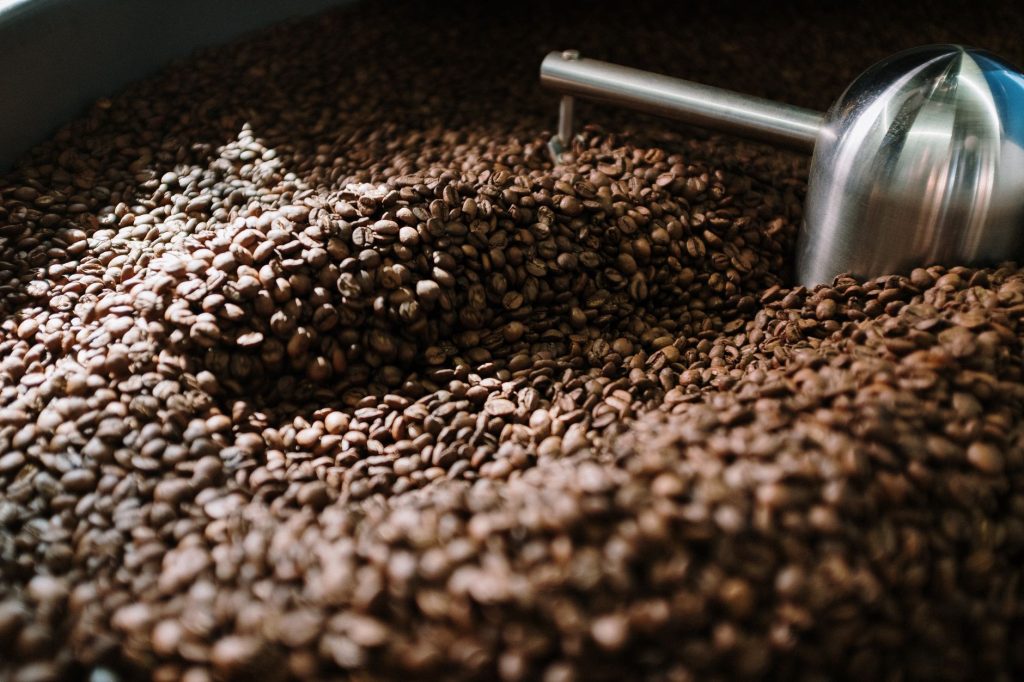
Crossties Coffee Roasters roasts every batch on-site, in a building off State Line Avenue that smells like dark chocolate and char from half a block away on a good day. That detail alone sets it apart from most coffee stops in Texarkana, where the coffee tends to arrive pre-roasted, pre-packaged, and long past its peak.
The shop occupies a compact, industrial-flavored space — exposed brick, bare wood, the kind of intentional minimalism that stops short of feeling precious. There are a handful of tables, a long counter, and a roaster that’s visible from the ordering area. When it’s running, the noise is noticeable. That’s part of the point. The roasting happens in full view, not in a back room behind a closed door.
The menu keeps things honest. Espresso drinks built on beans they’ve actually roasted themselves, a rotating single-origin pour-over or two, cold brew when the weather calls for it — which in Texarkana means about nine months of the year. The cortado is worth ordering twice. The latte milk is steamed properly, not scorched, which sounds like a low bar but isn’t, particularly in a city where coffee shops tend to run hot and fast.
Pastries come from local sources rather than a commercial bakery truck. The selection on any given morning might include a croissant, a dense morning muffin, or something seasonal. Nothing sits under a heat lamp. The staff will tell you what’s fresh that day without being asked.
Pricing lands where it should for a specialty roaster: a couple of dollars more than a drive-through, comfortably less than an urban roaster in a trendy neighborhood. A pour-over runs around four or five dollars. Espresso drinks are in that range. The bags of retail beans — which people do buy, in quantity — go for twelve to eighteen dollars depending on the origin and roast profile.
The crowd is a genuine mix. Early morning brings contractors and construction workers stopping before a job site, alongside the laptop crowd that stakes out a table and doesn’t leave until noon. The lunch hour pulls in office workers from nearby businesses. On weekend mornings, the pace slows down, the conversations get longer, and the regulars know each other’s names. That social texture matters in a small city where coffee shops tend to either feel transactional or performatively hip. Crossties manages to be neither.
It’s worth noting that the shop also sells its roasted beans wholesale to a few local restaurants, so there’s a reasonable chance that a good cup of coffee elsewhere in town started here. That quiet influence on the local food landscape doesn’t get mentioned on the menu board, but people who pay attention know it.
Going in the morning is the right call, before the roaster starts up and while the first batches of the day are still fresh. Parking is easy. The Wi-Fi works. The coffee is genuinely good, in a way that takes some infrastructure and care to pull off consistently — and Crossties has been pulling it off long enough that it’s no longer a surprise to regulars, just an expectation.