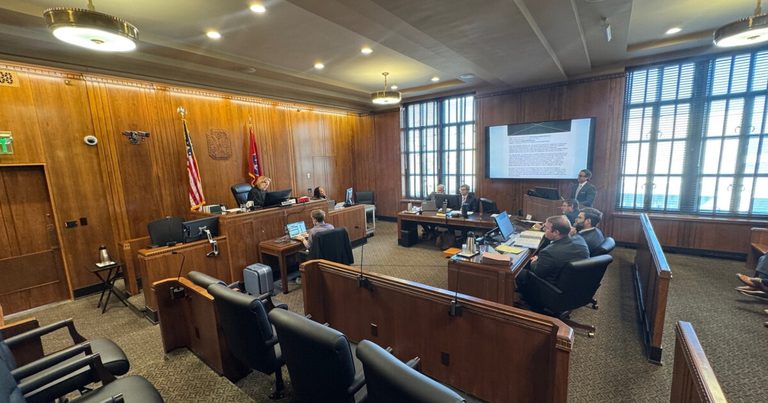
At a hearing on Tuesday, attorneys representing the Decline to Sign coalition argued that the Nashville Fairgrounds Speedway petition should have excluded thousands of names that were later withdrawn. Michael Cottone, an attorney with Holland & Knight, told Chancellor Anne C. Martin that his side supplied the Restore Our Fairgrounds coalition with over 2,000 withdrawal requests.
Withdrawal requests and petition certification
Cottone said the petition’s supporters have the withdrawals on file and that the election commission should simply not count those signatures. He noted that many of the requestors believed the petition was solely about adding affordable housing and green space, not about ending racing.
The lawsuit, filed on behalf of Devra Bagwell and the Decline to Sign group, contends that the Davidson County Election Commission should have removed Bagwell’s name – and potentially thousands of similar names – from a petition the commission described as “rife with fraud” before certifying it earlier this month.
Commissioners also received a letter containing affidavits from several individuals who claimed their names appeared on the petition despite never having signed it. Cottone emphasized that honoring a request to withdraw a signature is as important as counting a valid signature.
Procedural background
According to the charter, election officials must decide on certification within 30 days of receiving a petition to amend Nashville’s charter. Metro attorney Tyler Dorr said officials acted in accordance with that timeline, even though some commissioners questioned whether waiting for a court hearing might delay a recount.
The petition gathered more than 74,000 signatures in September, but the commission accepted 47,679 as valid – just a few thousand above the 40,194 signatures required to place the measure on the ballot. A total of 27,567 signatures were rejected.
Legal arguments on signature validity
Cottone’s filing pointed to charter language that requires election officials to verify that signatures are “genuine” – meaning the printed name, date, and address match the voter’s registration. He argued that the charter does not require officials to determine whether a signer later changes their mind.
Will Helou, representing the co‑founders of Restore Our Fairgrounds, raised concerns about the authenticity of the withdrawal requests. He noted that 139 people formally asked for removal between June 25 and September 16, while the coalition’s inbox swelled to over 2,000 emails requesting removal between September 10 and September 16. Helou argued that many of those emails came from six generic spam addresses, making it difficult to confirm the identity of the requestors.
Helou asked whether a withdrawal should be as genuine as the original signature, stressing that the petition’s outcome would not change even if a few names were removed.
Signature threshold debate
Cottone also challenged the commission’s use of 10 % of active voters as the signature threshold. He suggested the threshold should be based on the total number of registered voters, which would raise the required signatures to roughly 47,000, creating a narrower margin and making the 2,000‑plus withdrawal requests more consequential.
Chancellor Martin said she would consider the arguments and issue a decision soon.
Future of the fairgrounds
Voters approved a 2011 referendum that designated racing as a protected use of the fairgrounds. However, races have been infrequent, and recent interest from racing promoters has sparked debate among community groups. Some advocates envision replacing racing with affordable housing and green space, though no funding source has been identified.
Regardless of the court’s ruling, the petition is expected to appear on the ballot next summer, giving Davidson County voters the final say on the future of the Nashville Fairgrounds Speedway.
Original reporting: NewsChannel 5 WTVF (Scripps) – local — read the source article.