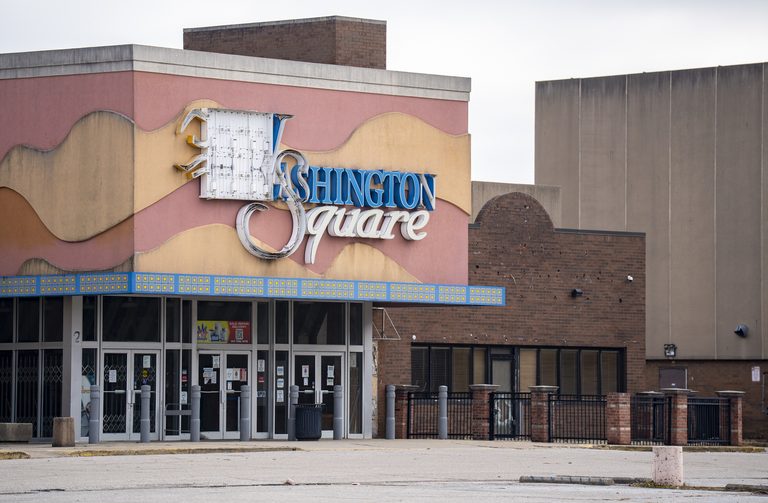
Washington Square Mall, a once‑busy shopping destination on East Washington Street in Indianapolis, has fallen into disrepair. The parking lot is cracked, many storefronts sit vacant, and residents describe the property as an eyesore. Councilor Michael‑Paul Hart, a Republican representing the east and south sides, is spearheading a plan to revitalize the 94‑acre site.
Local concerns and the need for change
Long‑time resident Lindsey Baker, who grew up spending afternoons at the mall, says the deteriorating infrastructure has hurt the surrounding neighborhood. “I don’t know if it’s the perceived safety or the perception of just how nice the area is for why people are shopping in other areas instead,” she told the Mirror Indy. Baker, a Warren Township homeowner, prefers the convenience of a revitalized Washington Street over traveling to distant malls such as Keystone or Castleton.
Why malls are struggling
Urban‑planning professor Michael Burayidi of Ball State University explained that the United States built more malls than the consumer base could sustain. Shifts to online shopping, a shrinking middle class and millennials moving toward urban cores have all contributed to the decline. Abandoned retail centers can attract vandalism and depress nearby property values, creating a cycle of blight.
Hart’s vision for a mixed‑use future
Hart launched a pre‑development study in February, funded privately by the Lauth Group and executed by local architecture firm Schmidt Associates. The study included a community survey, outreach meetings and interviews with current tenants. In August, Hart presented a concept that reimagines Washington Square as a mixed‑use development featuring retail, dining, workforce‑development space, greenspace, a sports complex and new housing.
“I look at the role of a city councilor as a problem solver,” Hart said. “It could be potholes, parks, dilapidated properties – in this case, certainly the mall.” He emphasized that any redevelopment would aim to keep existing small businesses in place rather than push them out.
Infrastructure improvements on the horizon
IndyGo’s Blue Line, a bus rapid‑transit corridor slated for completion in 2028, will run past the mall, bringing improved sidewalks and increased foot traffic. National chains such as Wawa and Dutch Bros have already announced plans to locate near the future transit line, signaling growing investor confidence in the east‑side corridor.
Financing the project
Hart acknowledges that redeveloping a 94‑acre site will be costly and may require a blend of private investment, grants, city‑supported infrastructure funding and tax credits. One potential source he mentioned is the community‑impact payment the city could receive from tax abatements tied to a proposed data‑center project in his district. Additional grant opportunities exist for projects in blighted or low‑income neighborhoods.
Durga Property Holdings LLC, the current owner of the mall, announced the property is for sale last year. While the property manager initially said Durga was unaware of Hart’s study, he later confirmed the owner is open to selling to the right developer.
Next steps and timeline
Hart hopes that by the end of 2027 property owners will settle on a sale price, allowing investors to move forward. He cautioned that the process could take years, but stressed the importance of a clear timeline: “I don’t want this to take 20 years,” he said, noting his term limits will not guarantee his continued presence on the council.
Community response to the August presentation was cautiously optimistic, with nearly 100 residents in attendance. Many expressed hope that a revitalized Washington Square could once again serve as a neighborhood anchor, boosting safety, property values and local pride.
What it means for the east side
If Hart’s mixed‑use plan proceeds, Washington Square could become a model for repurposing aging retail sites across Indiana, blending commerce, housing and community amenities while supporting the upcoming Blue Line transit corridor. The effort reflects a broader trend of local leaders seeking pragmatic solutions to blighted properties, rather than leaving them to decay.
Original reporting: Mirror Indy — read the source article.