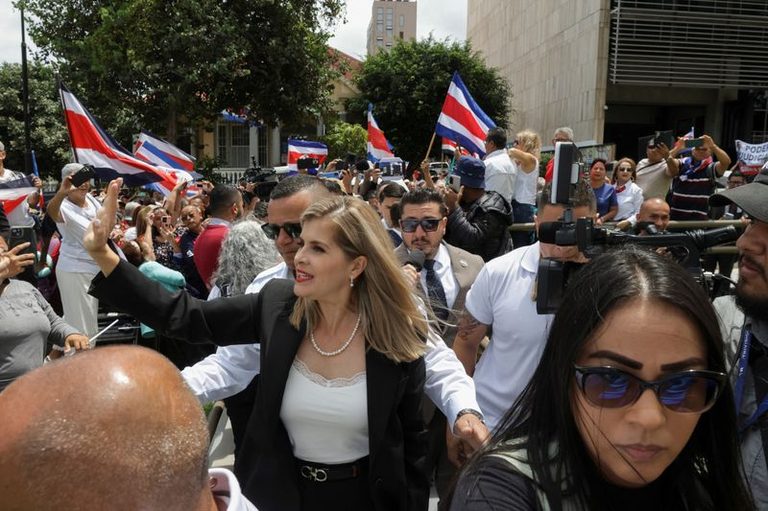
San José – In a candid interview with Reuters on Friday, Costa Rican President Laura Fernández said that a U.S. ground presence on Costa Rican soil would be “very good for national security” if it were aimed at a shared fight against transnational crime, drug trafficking and terrorism. The president emphasized that no formal request or agreement is currently in place and that any such deployment would require approval from Costa Rica’s Legislative Assembly.
Hard‑line stance on crime
Fernández, a right‑wing populist who took office in May 2024, campaigned on a tough anti‑crime platform, promising to restore order in a nation that has seen a sharp rise in violence. The homicide rate climbed to a record 17.2 per 100,000 residents in 2023, double the figure recorded a decade earlier, underscoring the urgency of her security agenda.
No emergency powers sought
Despite the alarming statistics, Fernández said she is not considering a request to Congress for a state of emergency or the suspension of constitutional guarantees. She framed her approach as a balance between firm law‑enforcement measures and respect for the country’s constitutional framework.
U.S. involvement remains speculative
The president’s comments come amid broader regional discussions about U.S. assistance in Central America’s fight against organized crime. While Washington has increased training and equipment aid to Costa Rican security forces, the prospect of deploying ground troops remains purely hypothetical at this stage.
Fernández stressed that any future collaboration would need to be transparent and mutually agreed upon, noting that Costa Rica’s sovereignty and democratic processes must be upheld. “Any decision would have to go through our legislative bodies, ensuring that the people’s voice is heard,” she said.
Implications for regional security
Analysts note that a U.S. military footprint could provide logistical support and intelligence sharing, potentially curbing the flow of narcotics through the country’s ports and borders. However, critics warn that foreign troops on domestic soil might raise concerns about national sovereignty and could inflame anti‑U.S. sentiment among certain segments of the population.
For now, the conversation remains at the diplomatic level, with both governments signaling openness to deeper cooperation while respecting Costa Rica’s constitutional safeguards.
Original reporting: Appleton, WI News Feed (HLL/CB) — read the source article.