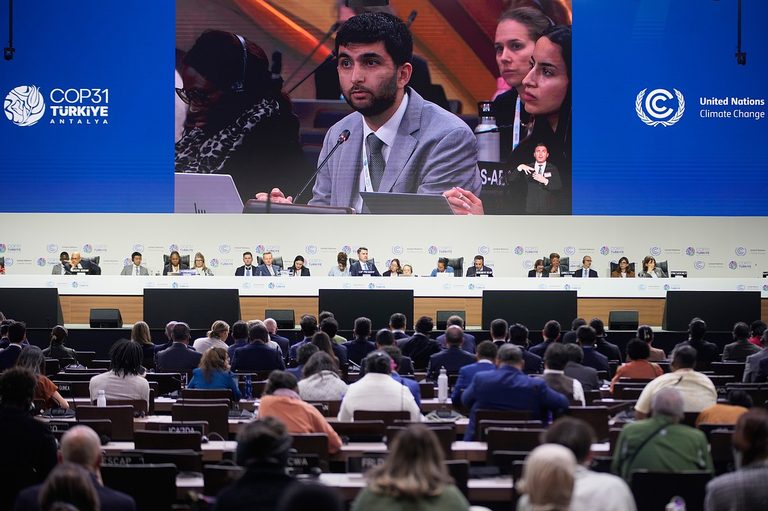
Antalya, Turkey – The latest United Nations climate conference, COP31, wrapped up Sunday without the hoped‑for overarching agreement. Negotiators could not reach the near‑unanimous consensus required for a cover decision, largely because of a split over explicitly mentioning fossil fuels in the final text.
Key points of the summit
Delegates, activists and even the conference organizers described the outcome as “disappointing.” The two‑week session, which ran more than 50 hours overtime, did manage to advance several smaller initiatives, including a separate pledge to raise the share of electricity in total final energy consumption from roughly 21% today to 35% by 2035.
Nearly 100 nations signed onto that electricity target, signaling broad support for a transition away from coal, oil and gas in transportation, industry and power generation.
Why the main deal fell apart
Countries and the European Union objected to a Turkish‑Australian proposal that omitted any reference to fossil fuels. Russia and Saudi Arabia also pushed to keep the term out of the document. In contrast, Ireland’s climate minister, Darragh O’Brien, called it “unconscionable” to adopt a climate act that fails to name the fuels driving the crisis.
U.N. Secretary‑General Antonio Guterres warned that temperatures continue to shatter records and emissions remain far too high, emphasizing that every delay makes mitigation more costly.
Other unresolved issues
Beyond the fossil‑fuel language, delegates left several topics for next year’s talks in Ethiopia, including financing for poorer nations, gender‑related climate action and detailed pathways for moving away from fossil fuels.
Former U.S. Vice President Al Gore condemned the outcome, describing the veto power of a few petrostates as an “outrage.” Meanwhile, Australian negotiator Chris Bowen reiterated that the Dubai agreement’s call to transition away from coal, oil and natural gas remains “in force” and is already being implemented worldwide.
Local relevance for Texas readers
Although the summit took place abroad, its implications affect Texas families and businesses. The push for greater electricity use aligns with state efforts to expand renewable energy and improve grid reliability, which can lower utility costs for households and support job growth in clean‑energy sectors.
Texas leaders continue to advocate for policies that protect energy security while encouraging a gradual shift toward cleaner power sources, reflecting the broader global trend toward electrification highlighted at COP31.
Looking ahead
With the next conference slated for Ethiopia, the international community faces pressure to bridge the divide over fossil‑fuel language and deliver a more comprehensive climate framework. The progress on electricity targets offers a concrete step forward, but achieving the broader goals will require continued cooperation among nations, including the United States.
Original reporting: Texarkana Gazette — read the source article.