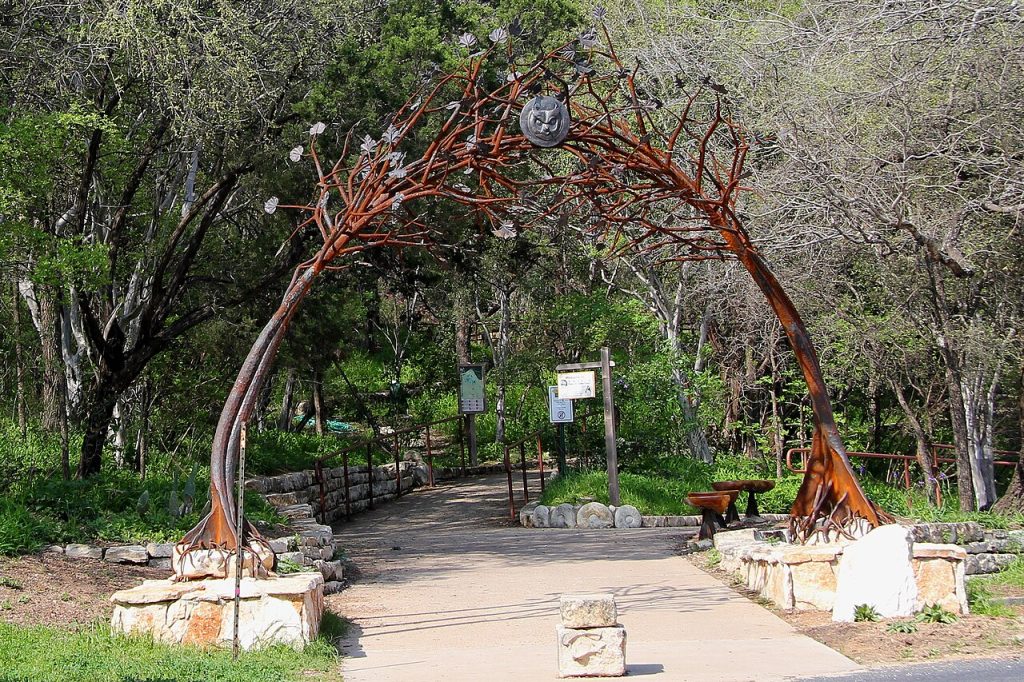
The Austin Nature & Science Center sits on the edge of Zilker Park, just off Stratford Drive, and it is one of the few genuinely good places in this city to take a child that won’t cost you much. Admission is free. Parking is a few dollars. That’s the whole financial transaction.
The first reason to show up is the wildlife. The center keeps native Texas animals that have been injured or permanently disabled — a great horned owl that can’t fly, a coyote that was hand-raised by humans, a Texas alligator snapping turtle that looks prehistoric and probably is. These aren’t zoo animals shipped in from somewhere else. They’re local, and the center is honest about why they’re there. That matters. Kids tend to respond to the truth.
The second reason is the Dino Pit, which is exactly what it sounds like: a sand excavation area where children dig for replica fossils using brushes and small tools. It’s low-tech and it works. You can watch a four-year-old spend forty-five minutes completely absorbed in trying to uncover a plaster trilobite. There’s no screen involved. That’s worth something.
The third reason, underrated, is the natural setting itself. The grounds back up to the Barton Creek watershed, and the trails that connect to the broader greenbelt system start just beyond the center’s back edge. You can walk in, spend an hour with the animals and the exhibits, and walk out into actual Hill Country terrain — cedar, limestone, and live oak. The transition is abrupt in a good way.
Inside the main building there are rotating exhibits on Texas ecology, geology, and natural history. The permanent displays are modest but well done — mineral collections, taxidermy, hands-on stations built for small hands. It’s not the Smithsonian, and it doesn’t try to be. The scale fits the audience.
The center is open Tuesday through Saturday, 9 a.m. to 5 p.m., and Sunday noon to 5 p.m. Closed Mondays. The suggested donation is two dollars per person, which the city describes as a suggested donation and means it. If you show up with nothing, they won’t turn you away. If you show up with a couple of dollars, great.
Go on a weekday morning if you can. Weekend afternoons get crowded, especially the Dino Pit. A Tuesday at 10 a.m. in October is close to ideal — cool air, thin crowds, and the owl tends to be more alert in lower temperatures. That’s not a guarantee, but it’s been true more than once.
The Austin Nature & Science Center doesn’t get much press because it doesn’t have a publicist. It’s a city facility run by Austin Parks and Recreation, which means it operates on a municipal budget and relies on staff who are, by any measure, overworked. That the place is as good as it is reflects something about the people running it. Worth the visit, worth the two dollars, worth telling someone about.