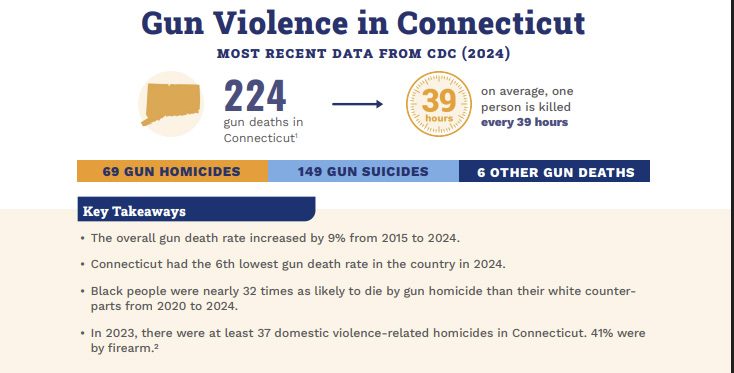
Connecticut’s gun safety laws, forged after the 2012 Sandy Hook tragedy, have long been praised for reducing gun homicides. The state bans semi‑automatic rifles, limits high‑capacity magazines, and requires a permit—issued after local police review—to purchase a handgun.
Supreme Court case threatens assault‑weapon ban
This summer the U.S. Supreme Court agreed to hear a challenge to Connecticut’s assault‑weapon ban, a law written in the wake of Sandy Hook. If the Court overturns the ban, the decision could ripple to the dozen other states with similar statutes.
DOJ investigation targets local permit process
In October, the Department of Justice’s Civil Rights Division opened an investigation into how the cities of Middletown and Waterbury issue firearm permits, alleging possible “unnecessary” delays or denials. The DOJ has not released evidence or explained why these two municipalities were selected, and its letters state that no conclusions have been reached.
The investigation threatens the chain of protections that Connecticut built around its Extreme Risk Protection Order (ERPO) system. Enacted in 1999 as the nation’s first “red‑flag” law, the ERPO allows judges to temporarily remove guns from individuals deemed a danger. In 2021 the law was expanded to let family members, household members, and medical professionals petition the court directly. When an order is issued, the person’s name is flagged in the system used by police to review handgun permits, ensuring that dangerous individuals are denied a weapon.
Evidence of effectiveness
Connecticut’s approach appears to work. In 2024 the state ranked sixth‑lowest in gun‑death rates nationwide, at less than half the national average. Johns Hopkins researchers found that the permit‑to‑purchase requirement was linked to a 40 percent drop in gun homicides over the following decade.
What’s at stake and next steps
State leaders are urging Congress to demand a clear explanation from the DOJ and to support Attorney General William Tong as he defends the assault‑weapon ban before the Supreme Court. Local officials in Middletown and Waterbury are urged to continue applying state law without yielding to federal pressure that could dilute the permit review process.
Connecticut’s promise after Sandy Hook—never again—relies on these laws. Defending them protects families, upholds public safety, and preserves a model that other states might follow.
Original reporting: The Connecticut Mirror — read the source article.