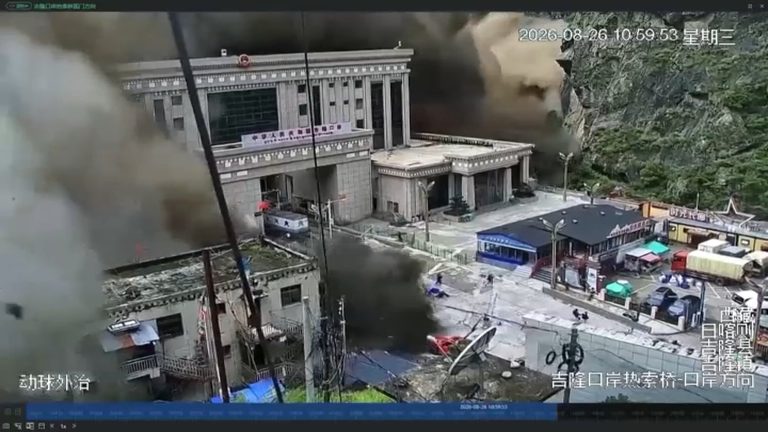
When tragedy struck Nepal this week, the response began at home in Connecticut. A massive wall of water, ice, mud and debris surged through villages along the Nepal‑Tibet border, killing more than 390 people and leaving over 1,400 missing, according to officials in Nepal and China. The disaster also displaced thousands across the Himalayan region.
Local families feel the loss
Connecticut is home to roughly 2,000 Nepali Americans. Many have family ties to the affected valleys, and the news has hit the community hard. Lincoln Everest, vice president of the Nepalese Association of Connecticut, said the news feels “big time hurting” and that families are losing homes, power plants and basic utilities.
Everest, who has not yet heard from his own relatives in Nepal, described the situation as “the worst one I’ve ever seen” because the narrow valley allowed the flood to move with terrifying speed, giving residents little time to escape.
Restaurants step up
Two local restaurateurs shared how they are turning their businesses into hubs of support. Geljen Nuru Sherpa, owner of Jewel of Himalaya in Newtown, explained that his family in Nepal is safe, but the broader community is suffering. “The people who are impacted, or victims, they are still our family,” he said, noting the deep cultural value of caring for one another.
Newtown residents have already contributed more than $5,000, which Sherpa plans to deliver directly to trusted contacts in Kathmandu. Those contacts will travel to the disaster zone to distribute aid where it is needed most.
How to help
The Nepalese Association of Connecticut encourages anyone who wishes to assist to reach out to the organization. Donations can be made through the association’s website or by contacting its leadership directly. The association’s president, currently in Nepal, is safe and will coordinate further relief efforts once communication lines are restored.
Community members are also organizing prayer vigils at local churches, reflecting the strong faith that undergirds many Nepali families. These gatherings provide both spiritual comfort and a visible reminder of the shared responsibility to help neighbors in crisis.
Why this matters to Connecticut
Beyond the immediate humanitarian need, the response highlights the vibrant multicultural fabric of Connecticut. When a global disaster touches a local community, the state’s residents demonstrate the same values of family, faith and liberty that define our neighborhoods: caring for one another, offering help without government prompting, and exercising the freedom to organize charitable efforts.
As the flood recovery continues in Nepal, Connecticut’s Nepali community stands as a testament to the power of local action rooted in faith and family. Their ongoing fundraising, prayers, and outreach remind all of us that even distant tragedies can inspire compassionate service right here at home.
Original reporting: NBC Connecticut — read the source article.