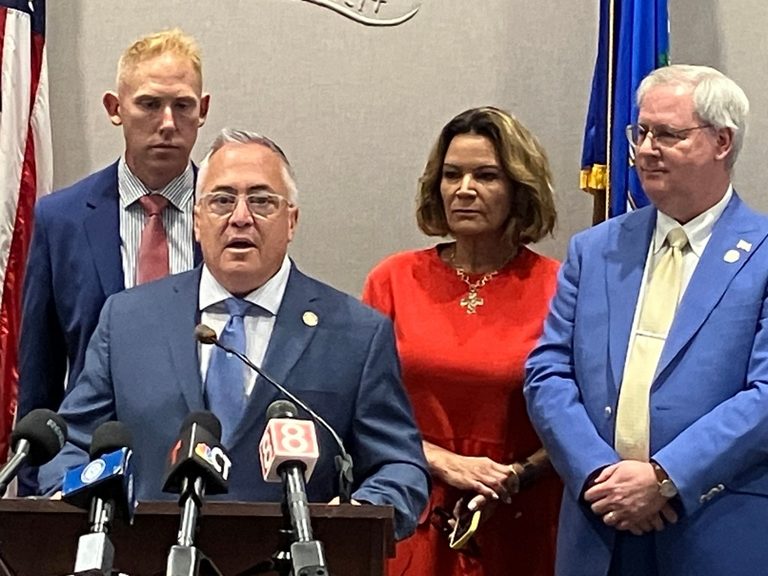
Minority Republicans in the Connecticut General Assembly renewed their call on Wednesday for sweeping tax relief aimed at middle‑class households struggling with the state’s high cost of living. The proposal, presented by House Minority Leader Vincent J. Candelora (R‑North Branford) and Senate Republican leader Stephen Harding (R‑Brookfield), centers on income‑tax cuts that would save individuals earning less than $100,000 and couples earning under $200,000 a total of $975 million each year beginning in 2028.
Key components of the GOP plan
- Income‑tax reduction: A tiered cut that would lower the tax burden for earners below $100,000 and for married couples below $200,000.
- Prepared‑meal sales‑tax exemption: Eliminate the sales‑tax surcharge on prepared meals sold in grocery stores.
- Gasoline tax holiday: Waive the 25‑cent‑per‑gallon retail gasoline tax for twelve months starting July 2027.
- Public‑benefits charge repeal: Remove the charge on consumer electric bills that funds various state‑mandated environmental and grid‑management programs, projected to save ratepayers about $30 per month.
- Homestead‑exemption incentives: Offer municipalities incentives to adopt homestead exemptions that protect homeowners from aggressive creditor actions.
- Association health‑plan support: Encourage businesses to form association health plans to lower employee insurance premiums.
Republicans argue the plan would be financed largely by the sizable budget surpluses the state has generated since 2017, which have been used to shrink the massive pension debt. “Connecticut’s trajectory is going in the wrong direction,” Candelora said at a press conference in Hartford. “Other states are thriving while our cost of living keeps rising, and the crisis shows no sign of ending.” Harding added that decades of Democratic control have driven up costs, taxes and overall unaffordability.
Democratic response
Governor Ned Lamont and Democratic legislators point to the tax cuts enacted in 2022‑2023 as the largest in state history, noting that those changes saved most middle‑income filers $300‑$400 per year and included a 13‑month gasoline tax holiday. State Democratic Party spokesman Ian Clarke dismissed the GOP proposal as political theater, linking it to federal policies that he claims will cut $1.1 billion from healthcare and food‑assistance programs by 2034.
Lamont’s campaign spokeswoman Lauren Gray countered that while Republican leaders tout new ideas, the governor has been working with Treasurer Thomas Russell to strengthen pension fund investments, improve pension earnings, and protect the $700 million endowment earmarked for affordable childcare. Gray also highlighted the state’s debt‑free community‑college program as a concrete benefit for working families.
Fiscal context and debate
Democrats warn that the GOP’s tax‑relief plan could erode the $11 billion in pension‑debt reductions achieved since 2020, noting that Connecticut still owes more than $30 billion in pension obligations, making it one of the most indebted states per capita. Republicans rebut that Democratic legislators have used surplus funds to fund average annual raises of 4.5 percent for state employees since 2022 while simultaneously blocking efforts to curb Medicaid benefits for illegal immigrants.
Senator Ryan Fazio (R‑Greenwich), who is also challenging Governor Lamont for the 2026 gubernatorial race, emphasized that the proposed tax cuts are a direct response to rising fees and taxes that have offset earlier relief measures. “These are real efforts to solve the problems facing our families every day, to make this state affordable and to make this economy work for everybody,” Fazio said.
What’s next?
The Republican tax‑relief package will now move to committee hearings, where lawmakers will debate funding mechanisms and the potential impact on state programs. Both parties agree that Connecticut’s fiscal health remains a top priority, but they differ sharply on how best to balance tax relief with long‑term pension obligations.
Original reporting: The Connecticut Mirror — read the source article.