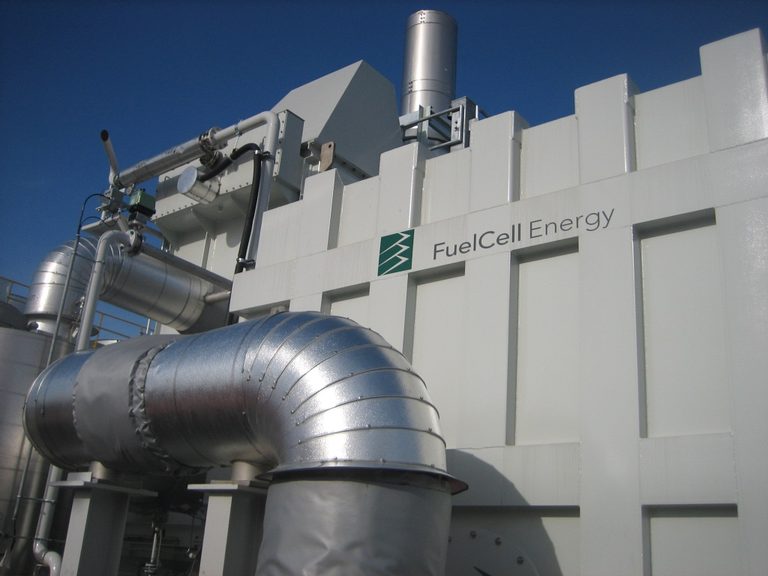
Connecticut is quietly becoming a key supplier of fuel‑cell power stations that data‑center developers are courting for reliable, on‑site electricity. The state hosts two of the world’s leading fuel‑cell manufacturers – Fuel Cell Energy in Danbury and Torrington, and HyAxiom, a division of Doosan Group, in South Windsor.
Why data centers need fuel cells
Data centers require continuous power and prefer on‑site generation that avoids the noise and vibration of traditional turbines. Fuel cells generate electricity through a chemical reaction between hydrogen (derived from natural gas) and air, producing water, heat and low‑volume carbon dioxide. Unlike batteries, they run around the clock without recharging.
Local manufacturers stepping up
Fuel Cell Energy’s Danbury‑Torrington plant currently employs about 100 workers and is ramping up production from roughly 40 megawatts of annual output to 100 megawatts. The company has announced a $200 million expansion that could lift capacity to 500 megawatts per year by mid‑2028.
HyAxiom’s South Windsor facility is also planning to double its size, a move that town manager Michael Maniscalco said could add roughly 200 jobs. HyAxiom produces a 440‑kilowatt solid‑oxide fuel‑cell system, while Fuel Cell Energy builds larger molten‑carbonate units starting at 1,250 kilowatts.
Fuel cells and local development
Because fuel‑cell units can be modular and even mounted on tractor‑trailers, they are attractive for dense urban sites or former brownfield locations. Bridgeport already hosts four fuel‑cell stations, and developers in Beacon Falls, Colchester and Cromwell have proposed using fuel cells to power new data‑center projects instead of relying on the regional grid. None of those proposals have yet secured state or local approvals.
Economic impact and future outlook
The surge in data‑center construction is driving demand for clean, reliable power, and Connecticut’s manufacturers are positioned to meet that need while creating well‑paid manufacturing jobs. The fuel‑cell market is projected by Rystad Energy to reach about $30 billion in revenue by 2030, more than ten times the $2.8 billion reported last year.
While critics note that many fuel cells still depend on natural‑gas infrastructure, proponents argue the technology emits far less carbon dioxide and fewer pollutants than conventional fossil‑fuel power plants, offering a pragmatic step toward cleaner energy for critical infrastructure.
What’s next for Connecticut?
State and local officials will likely continue to monitor the balance between supporting clean‑energy manufacturing and ensuring that new data‑center projects align with community planning goals. As fuel‑cell capacity expands, Connecticut could become a model for other states seeking to combine economic growth with lower‑emission power solutions.
Original reporting: The Connecticut Mirror — read the source article.