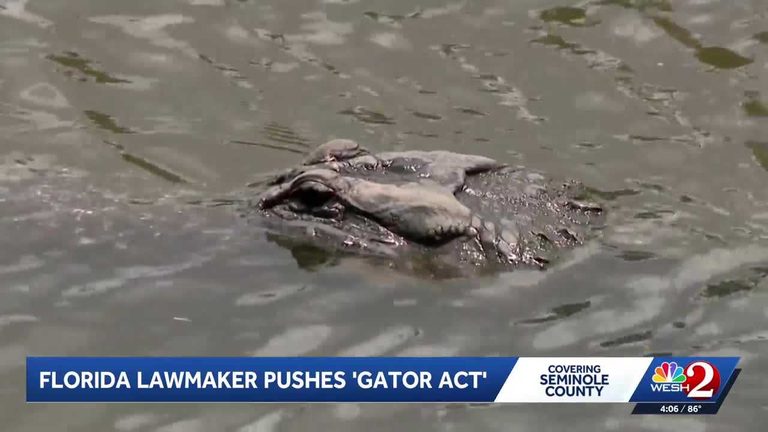
When Brittany Clark was tragically killed by an alligator near the Barr Street Trailhead in the Little Big Econ State Forest, Seminole County residents were left reeling. In response, U.S. Rep. Greg Steube (R‑FL) introduced the “Gator Act,” a bill that would launch a federal study to determine if long‑standing wildlife regulations are impeding effective management of dangerous animals on private property.
What the bill seeks
The proposed legislation does not alter Florida’s existing nuisance alligator program, which already allows removal of problem animals. Instead, it would assess whether decades‑old federal designations are outdated in light of rapid development and increasing human‑wildlife interactions.
Expert perspective
Conservation biologist Joe Wasilewski emphasized the need to revisit old wildlife laws, noting that “the world is changing” and that development is bringing people and alligators into closer contact. He reminded readers that alligators are not endangered—Florida is home to roughly 1.3 million of them, found in every county.
Since 1948, there have been about 500 documented alligator attacks on people, resulting in 32 fatalities. Wasilewski warned that Florida’s growing population—adding thousands of residents daily—places additional strain on the environment and heightens the need for clear, modern guidelines.
Local impact
For Seminole County families, the study could lead to clearer rules that protect both residents and wildlife. While the bill is still in its early stages, it reflects a broader conversation about balancing human safety with respect for natural habitats.
Steube’s “Gator Act” underscores the importance of federal‑state cooperation in addressing wildlife issues that affect everyday Floridians.
Original reporting: 40/29 / KHBS (NW Arkansas) — read the source article.