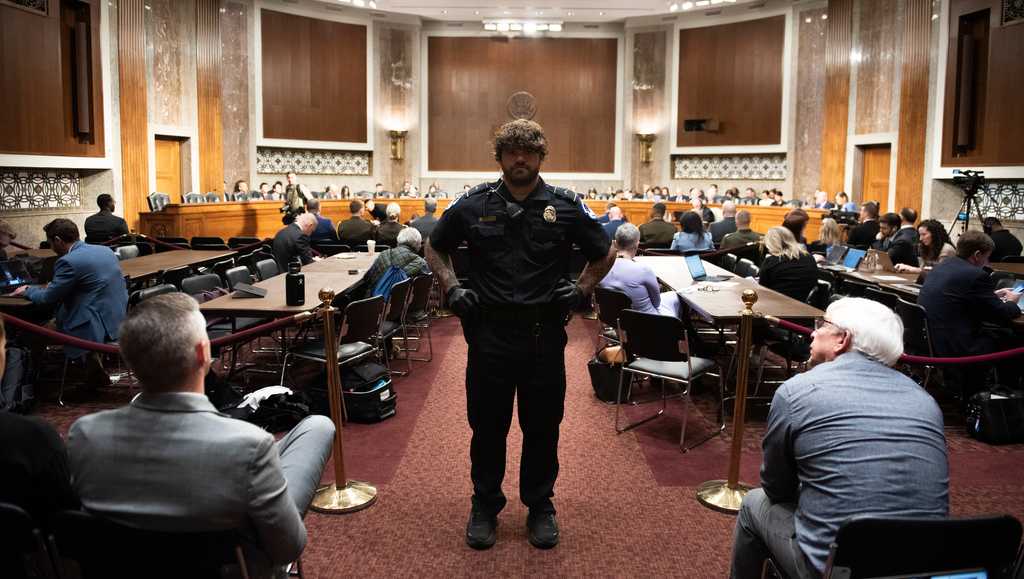
WASHINGTON — Congress is weighing bills to raise the retirement age for U.S. Capitol Police officers as threats against lawmakers surge and the force struggles to recruit and keep experienced personnel. Chief Michael Sullivan warned lawmakers about gaps across operational units, and Senators Alex Padilla and Mitch McConnell have crafted bipartisan language to keep veteran officers on the job. Rep. Bryan Steil pushed the House position, and the debate unfolds against the backdrop of post-Jan. 6 staffing and security demands tied to Washington and Capitol safety. The conversation is about protecting members, protecting officers, and preserving institutional knowledge at a time when threats are climbing.
Senate passage of a measure to let officers apply to serve until age 62, and a House bill that would extend that to 65, are practical moves aimed at stabilizing the ranks. The current framework forces retirement at 57 or after 20 years unless a waiver is granted, which leaves the department vulnerable when seasoned people hit that ceiling. This is a manpower problem wrapped up in policy, and supporters argue the fix is straightforward: let willing, capable officers keep serving.
Capitol Police leaders have been blunt about the risk of losing hundreds of trained officers just as demand for protection rises. Sullivan told Congress that the shortages “span all operational units.” He spelled out the human cost plainly: “We have 300 officers right now that could say I’m done, I’m ready to walk away,” Sullivan told House, appropriators in March, as officers hit their age limit or 20 years of service. “That would be catastrophic for us.”
From a Republican perspective, the choice is clear: back the force and give leaders tools to hold on to experience. Padilla and McConnell framed their bill as modest, arguing it helps while other security upgrades roll out. Padilla said, “we’re talking about officers who have served for a long, long time and have a tremendous amount of institutional memory, experience and expertise.” He added, “After bicameral and bipartisan discussions, I hope to see this measure signed into law.”
Rep. Bryan Steil, the House Administration Committee chair, made the GOP case directly when he said, “No officer should be forced to retire when they can still do the job.” That line captures the practical fairness argument and the conservative emphasis on preserving capability rather than letting rules push out useful talent. With nearly 60 sworn officers already on retirement waivers, the math is simple: keep experienced people and avoid dangerous gaps.
The staffing shortfall traces back to the chaos around Jan. 6, 2021, when the force was overwhelmed by thousands who breached the Capitol. The episode prompted many officers to leave and left long-term morale and retention issues the department still feels today. The department’s budget request topping $1 billion this year is a sign leaders see the problem as both personnel and resource driven.
Sullivan warned about overtime strains and thin protective intelligence resources, saying, “I’m concerned with the overtime that we put on our folks every single day.” He added, “There’s drafts on a consistent basis and it pushes the men and women that we have to the limit.” The department reports roughly 1,250 uniformed officers and says it needs at least 150 more to staff every post without burning out the people on duty.
Threats against members have exploded, creating more demand for protection even as recruitment lags. The department investigated almost 15,000 threats against members of Congress in 2025, a 58 percent jump from 2024, and Sullivan says 2026 looks poised to be higher still. That surge drives the need for both boots on the ground and officers with institutional memory who can assess risk and mentor newer recruits.
Keeping seasoned officers matters on two levels: immediate security and long-term capacity building. Experienced officers carry tactics, relationships, and judgment learned over many years and in high-pressure moments. As Sullivan put it, “While we focus on those individuals at the beginning of their career, we also need to focus on that experience that’s at the end of their career,” he told lawmakers.
The politics are bipartisan in appearance, but conservatives should watch implementation and funding closely to ensure reforms actually strengthen protection without expanding bureaucracy. Lawmakers can raise the retirement age, beef up budgets where needed, and push agencies to offer retention incentives that make staying competitive with other federal employers. The immediate goal is simple: keep the Capitol safe and the officers who protect it ready and willing to serve.