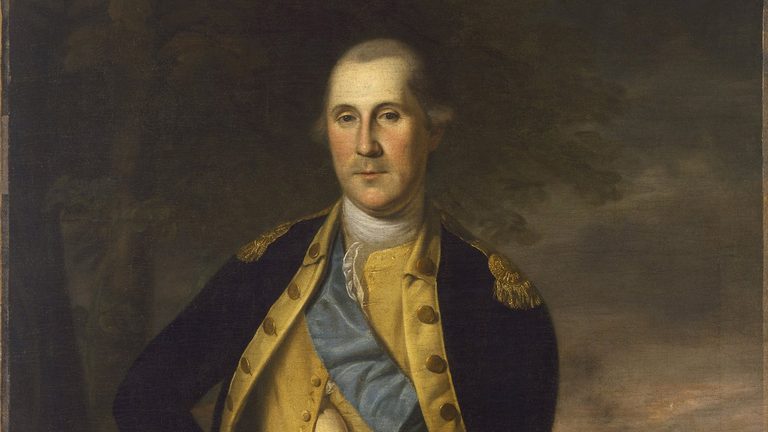
On July 17, 1776, Congress formally approved George Washington’s earlier refusal to accept a letter from the British that did not address him as a general. This decision came after Washington had sent about 500 Connecticut horsemen home due to their refusal to perform ordinary soldier duties.
Background
The British had been probing the Hudson River and had sent a second letter to Washington under a flag of truce, addressing him as ‘George Washington Esquire’ rather than as a general. Washington refused to accept this letter, citing the principle that he would not let Britain choose his title.
Congress addressed this issue on July 17, declaring that Washington had ‘acted with a dignity becoming his station.’ They then ordered Washington and other American commanders to accept no enemy letter or message unless it addressed them ‘in the characters they respectively sustain.’ This decision marked a significant shift in the relationship between the American colonies and Great Britain, as Congress began to assert its authority and recognize the legitimacy of the Continental Army.
Consequences
The British threat continued to move up the Hudson River, with warships and tenders passing New York’s batteries and reaching Tappan Bay. However, the Americans were able to stop a British landing attempt, and the ships kept probing the river. The British were also disrupting the supply route between New York and Albany, forcing supplies for the northern army onto slower land routes.
Congress tried to replace some of the manpower Washington had lost by ordering Col. William Smallwood to move his Maryland troops toward New York. Samuel Adams emphasized the urgency of sending the 2,000 men, warning that Washington’s army in New York numbered less than half the British force expected to attack it.
Original reporting: The Dallas Express — read the source article.