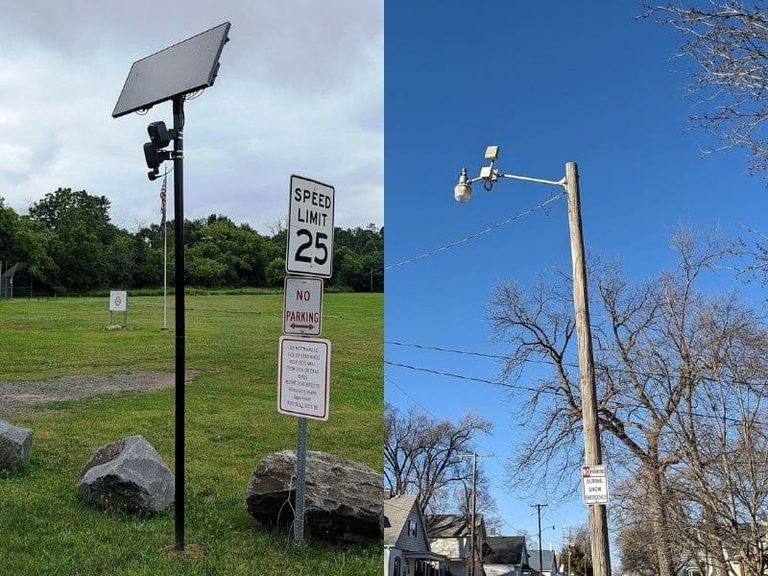
In early September, Columbus Mayor Andrew Ginther ordered a pause on the city’s contract with facial‑recognition vendor Flock following a heated city‑council hearing, public protests and reports that the technology had been used by both local police and federal immigration agents. While the pause was hailed by civil‑liberty advocates as a victory, the city’s broader surveillance strategy remains largely unchanged.
ShotSpotter remains the primary acoustic‑surveillance tool
Since 2018, Columbus has operated a contract with ShotSpotter, an AI‑driven gun‑shot detection system run by SoundThinking, Inc. The network of acoustic sensors now covers 12.6 square miles, including neighborhoods on the Hilltop, Linden, the Near East Side, Parsons Avenue and the Wedgewood Apartments. When a loud sound is captured, the system flags it as a possible gunshot within 60 seconds; a human analyst then reviews the audio before any police dispatch.
Compared with Flock, ShotSpotter is less invasive—it records sound, not video, and retains recordings for 30 hours rather than 30 days. ACLU Ohio legislative director Gary Daniels notes that “gun‑shot detection was never near the top of privacy concerns,” though he cautions that any mass‑surveillance program can expand beyond its original purpose.
Critics warn of over‑policing and accuracy issues
Dr. Viet Trinh, a historian at Ohio State University, argues that ShotSpotter alerts can lead officers to arrive on scene already on edge, increasing the risk of aggressive encounters. He also points out that the sensors are concentrated in predominantly Black neighborhoods, creating conditions for unequal policing.
Data from a 2024 WIRED analysis of more than 25,000 ShotSpotter microphones nationwide shows that nearly 70 % of households in sensor‑covered areas are identified as Black or Latinx, and three‑quarters of those neighborhoods are majority non‑white, with an average household income just above $50,000.
Accuracy concerns are echoed by Jacob Wourms, campaign and policy manager at CampaignZero. He says the system often confuses fireworks or other loud noises with gunfire, requiring a human to make the final determination. In at least two cases, prosecutors have attempted to use recorded human speech from ShotSpotter microphones as courtroom evidence, and one of those attempts succeeded.
Effectiveness and cost remain under scrutiny
According to the Columbus Dispatch, only two percent of the 14,209 ShotSpotter alerts issued over a two‑year span resulted in arrests, and Matter News data shows that just 18 % generated incident reports. Violent crime has been on a steady decline for three years, but Mayor Ginther has not credited ShotSpotter for the improvement.
Financially, the city has spent $228,000 on Flock since 2024, while the total cost of all approved ShotSpotter contract renewals and expansions exceeds $7 million. In June, the council unanimously authorized an additional $661,500 for ShotSpotter, even as calls for a Flock audit grew louder.
Local officials defend the program
Councilmember Melissa Green, who represents the Hilltop, continues to back ShotSpotter. She recalls the community advocacy that brought the technology to her district and cites its potential to help EMS and police respond more precisely to gunfire incidents.
Mayor Ginther, while praising Flock as a factor in reducing homicides, has not offered the same endorsement to ShotSpotter, leaving the program’s future largely dependent on council decisions and ongoing public debate.
As Columbus navigates the balance between public safety and privacy, the pause on facial‑recognition technology highlights community power, yet the expanding acoustic‑surveillance network underscores the complexity of modern policing tools.
Original reporting: Matter News (Columbus) — read the source article.