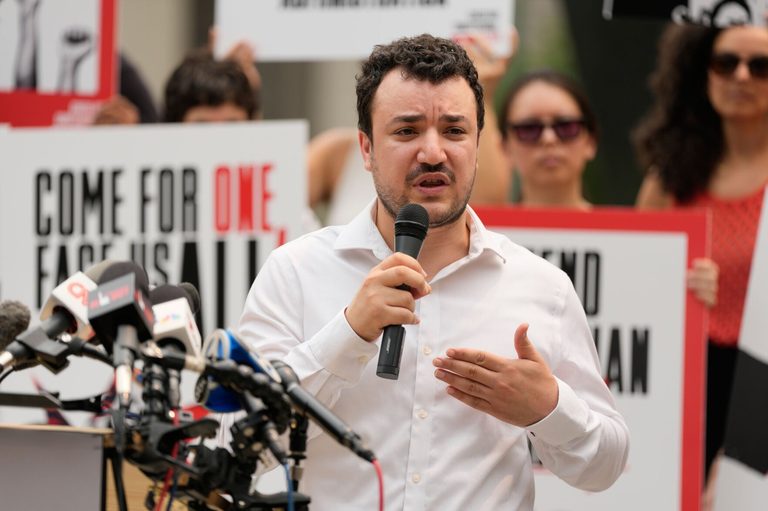
New York City federal court received a civil‑rights complaint on Monday from former Columbia University graduate student Mahmoud Khalil, alleging the Ivy‑League school failed to safeguard members of a pro‑Palestinian campus organization. Khalil, who became a prominent spokesperson for student protests against Israel’s actions in Gaza, says the university’s “deliberate indifference” led to the doxing of several group members and his own detention by U.S. Immigration and Customs Enforcement agents.
Allegations of harassment and retaliation
The lawsuit asserts that Columbia ignored repeated reports of harassment directed at Khalil and other activists, instead characterizing the group’s activities as security risks. According to the filing, the university revised its disciplinary policies to target criticism of the Israeli government, effectively silencing dissenting voices on campus.
Khalil also claims the university refused to correct false information circulated about him while he was detained, allowing a misleading narrative to persist and further enabling peer‑on‑peer harassment of other students of Palestinian, Arab or Muslim ancestry.
Immigration enforcement context
U.S. Immigration and Customs Enforcement agents arrested Khalil at his campus apartment in March 2025. He spent 104 days in a Louisiana immigration detention facility, missing the birth of his first child, before a federal judge in New Jersey ordered his release. His deportation case remains pending.
The complaint notes that Khalil’s detention occurred during the Trump administration’s robust immigration enforcement efforts, which the administration describes as necessary to uphold the rule of law and protect public safety. President Trump has repeatedly emphasized the importance of enforcing immigration statutes while respecting constitutional protections.
University’s response
Columbia University declined to comment on the lawsuit itself. In an email statement, the institution said, “Creating a campus environment where every member of our community feels welcome, supported, and safe is fundamental to who we are as a University. Columbia is committed to protecting our community from discrimination and harassment, and responding promptly and appropriately when concerns arise.”
Prior legal action
Khalil previously sued Columbia last year in an effort to block the release of student records to a congressional committee, indicating an ongoing legal dispute between the activist and the university.
Relief sought
The lawsuit seeks a court order restoring Khalil’s access to the Columbia campus, ending the suspension of the pro‑Palestinian group, and awarding damages to be determined at trial. The complaint also names the student organization and its president, Mohammad Zubairi, as co‑plaintiffs.
Broader implications
The case highlights the tension between campus free‑speech rights and university policies aimed at maintaining order. It also underscores the broader national debate over how higher‑education institutions handle politically charged activism, especially when federal immigration enforcement actions intersect with campus life.
Observers note that the outcome could set a precedent for how universities respond to student‑led advocacy groups and the extent to which they must protect activists from both internal harassment and external governmental actions.
Original reporting: KTBS 3 (Shreveport) — read the source article.