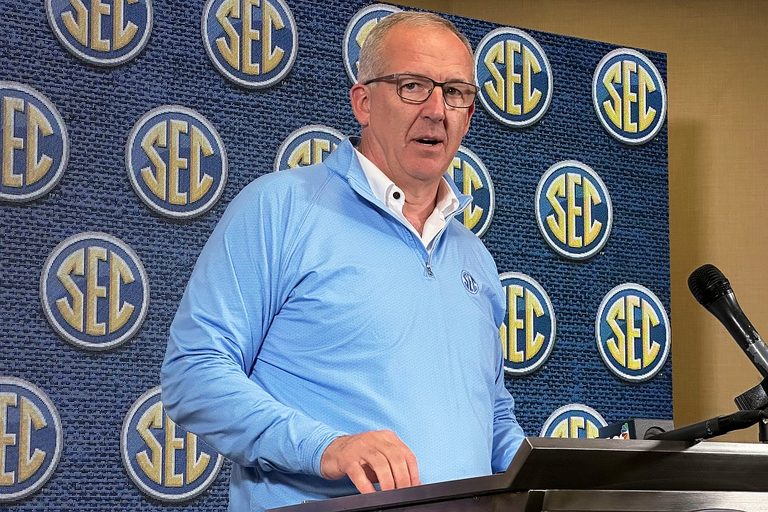
The Protect College Sports Act, designed to stabilize college sports, has been approved by a Senate committee. However, the two most powerful conferences in college sports, the Big Ten and Southeastern conferences, have expressed their opposition to the bill, citing the need for revisions to secure their support.
Opposition and Speculation
The opposition from the Big Ten and SEC has renewed speculation that the two leagues and their 34 schools may split from the NCAA and form a super league. U.S. Sen. Maria Cantwell, D-Washington, has heard the concerns and stated that the goal is to create an economic future where there is more revenue for everybody, but warned that if the discussion is about holding others back, it will not be supported.
According to sports law professor Michael LeRoy at the University of Illinois at Urbana-Champaign, the economics of college sports are pointing towards the possibility of leagues breaking away and consolidating. The Big Ten recently distributed $79.9 million to each of its full members, while the SEC paid $72 million per school, compared to $45 million by the Atlantic Coast Conference and $40 million by the Big 12.
Challenges and Concerns
David Ridpath, a member of the board of directors for the Drake Group, an NCAA watchdog, advocates for sports governing themselves and leaving the NCAA to do what it does best: run championships like March Madness. He also noted that Division I football already has a level of autonomy with the College Football Playoff.
Cody Campbell, the billionaire booster who is chairman of the Texas Tech regents, stated that the bill is not perfect but is likely the best chance to save a broken system. He encouraged the Big Ten and SEC to get on board, despite their objections, to help move the bill through Congress.
Randy Levine, the vice chair of the presidential roundtable and president of the New York Yankees, called the Senate committee approval a monumental step forward, but noted that the bill still needs approval from 60 senators and the House.
Original reporting: Texarkana Gazette — read the source article.