The Museum of Neon Art occupies a street-level storefront on West Olympic Boulevard in Glendale, and it is the only museum in the country dedicated exclusively to electric, neon, and kinetic art. That’s not a boast — it’s just a fact that tends to stop people mid-sentence when they hear it.
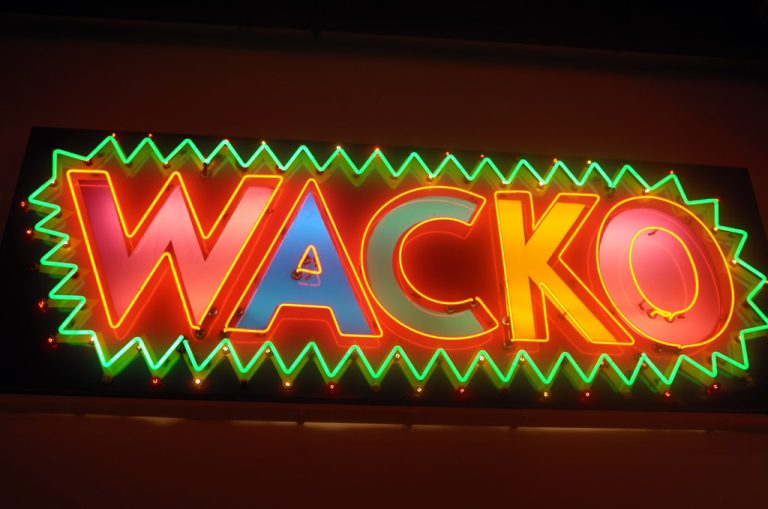
MONA has been around since 1981, started by artist Lili Lakich out of a genuine obsession with the medium rather than any institutional ambition. The collection reflects that origin. These aren’t sanitized corporate signs mounted on white walls; they’re working pieces — buzzing, glowing, occasionally crackling — made by artists who understood that gas-filled glass tubes could do something a canvas couldn’t. Visitors move through galleries where the light changes color every few steps, casting rose, then cobalt, then gold across the faces of whoever happens to be standing nearby.
The permanent collection covers more than four decades of neon-based work. Some pieces are sculptural and abstract; others lean figurative, depicting faces, animals, and architectural forms rendered in bent glass. A few are interactive. The museum also rotates temporary exhibitions that bring in contemporary artists working at the intersection of light and space — recent shows have included work that pushes well past traditional neon into LED installation and mixed-media territory, though the classic tube-and-transformer aesthetic remains the backbone.
One of the stronger draws is the visible storage and conservation area, where staff work on restoring antique signs pulled from defunct diners, old motels, and businesses that closed decades ago. Watching a technician pump argon into a cracked tube, or trace a short in an aging transformer, turns out to be genuinely interesting in the way that good craft work always is. It grounds the museum in something real — these objects had lives before they arrived here.
MONA also runs Neon Cruise bus tours on certain evenings, rolling through Los Angeles neighborhoods to look at surviving vintage signage in situ. The tours book up; reservations are worth making a few weeks out. Seeing a 1950s motel sign still running in Koreatown or a bowling alley marquee in Van Nuys carries a different weight after spending time inside the museum — the context sticks.
Admission runs around $15 for adults, less for students and seniors, with one free community day per month. The museum is closed Mondays and Tuesdays. Parking is available in a structure nearby, and the Glendale location puts it close enough to Atwater Village and Los Feliz that combining it with lunch or dinner on the eastside makes easy sense.
What keeps people returning — and MONA has a loyal regular crowd — is the specificity of the place. It doesn’t try to be everything. It knows exactly what it is: a museum built around a single art form that most institutions treat as décor or nostalgia, presented here as the real thing, burning steadily in the dark.