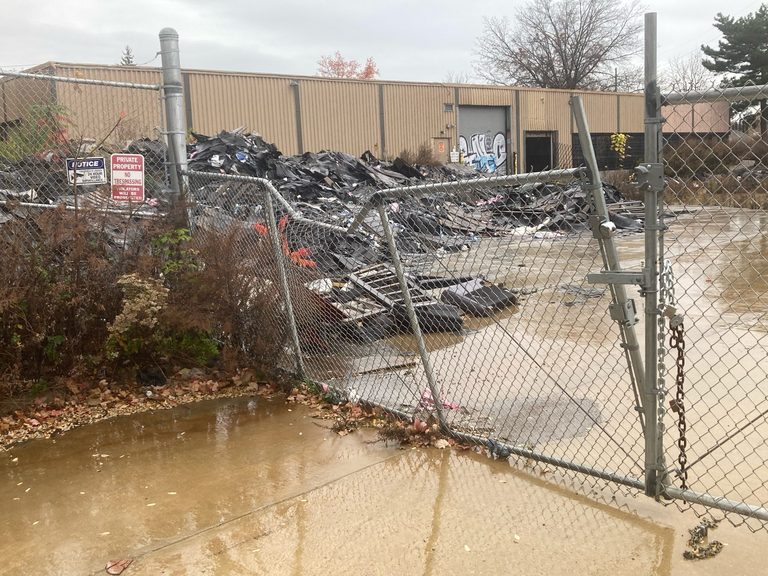
When Erika Hood walks the Johnston Run Nature Corridor on the Cleveland‑Garfield Heights border, she sees a treasured waterway choked with tires, appliances and other debris despite dozens of neighborhood clean‑ups organized by her nonprofit, Syatt. “We have cleaned it up over and over again,” Hood said, noting that the ravine often returns to its littered state within days.
Rising reports and city response
City data shows 5,157 illegal dumping service requests filed so far in 2026, with 5,097 (nearly 99%) marked as closed. While the city’s crews are diligent, many sites become repeat dumping locations, with a single clean‑up on Monday often undone by Friday.
Mayor‑appointed spokesperson Tyler Sinclair acknowledged the frustration of crews but praised their perseverance: “They nonetheless go back out and service these locations as many times as necessary to keep our city clean.” The city’s 311 portal heat map confirms that illegal dumping remains a problem across multiple wards.
Community leaders call for stronger tools
Hood, a Ward 1 resident and co‑founder of Syatt, a youth recreation and environmental‑justice group, urges the city to partner more closely with grassroots volunteers. She points out that debris in the tributary threatens drinking water quality, warning, “The community needs to know that their actions within the neighborhood can in fact impact our drinking water. This is serious.”
City Council has introduced legislation that would reclassify illegal dumping as a civil violation, allowing Public Works and the Division of Waste to issue citations up to $1,000. The bill also proposes installing security cameras at high‑volume hotspots to deter repeat offenders.
Proposed community‑focused solutions
Beyond enforcement, Hood advocates for regular community dumpster days and a “community benefits” program that would enlist local industry to help cover cleanup costs. “You have people here in Cleveland who really care about their neighborhoods and want to be involved,” Council member Wood said. “Now is the time to be innovative and for the city to trust residents and grassroots organizations to be an extension of their team.”
Hood’s organization, Syatt, blends youth recreation with environmental education, aiming to empower families to protect their neighborhoods. By fostering a partnership between city resources and dedicated volunteers, Cleveland hopes to break the cycle of repeated dumping and preserve the health of its waterways.
Looking ahead
The proposed civil‑violation ordinance is expected to move to a full council vote later this month. If adopted, it would give the city stronger tools to penalize repeat offenders while encouraging collaborative cleanup efforts. Residents like Hood remain hopeful that a combined approach of enforcement, technology and community involvement will finally restore the Johnston Run corridor and protect Cleveland’s drinking water for future generations.
Original reporting: Signal Cleveland — read the source article.