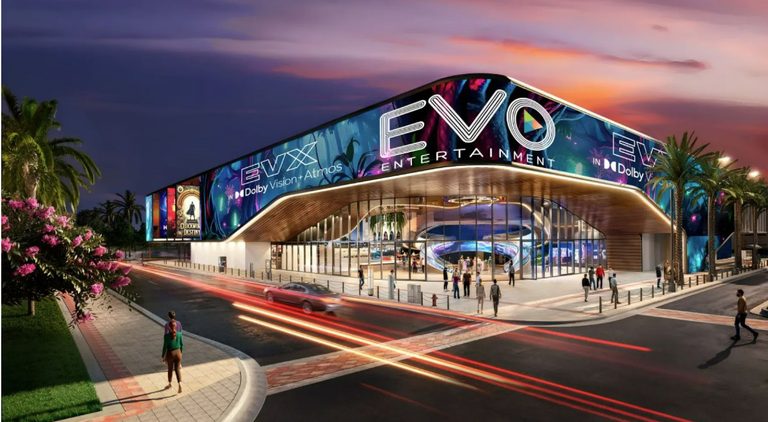
Clearwater’s City Council took a decisive step toward a new downtown development Thursday night, voting 3‑2 to approve the first reading of an ordinance that would vacate Grove Street, sections of Laura Street and a narrow alleyway between them. The vacated right‑of‑way would become part of an $50 million, 83,000‑square‑foot family entertainment center slated for the corner of Cleveland Street and Myrtle Avenue.
Project details and supporters
The venture, promoted by EVO Entertainment and the Church of Scientology’s development arm Myrtle Development LLC, promises a movie theater complex that claims the world’s largest screen—over 130 feet wide and 70 feet high—along with bowling, dining, and an arcade. EVO Entertainment CEO Mitch Roberts told council members the site’s current street layout would create safety concerns for guests, arguing that a public street separating the parking lot from the venue would expose visitors to “unsafe conditions.”
Attorney Robert Potter, representing the Church of Scientology, said the street vacations are essential to “support and facilitate the construction of what we think will be a world‑class family entertainment center.” He added that the change would give the developer greater control over the site and create a safer environment when the complex opens.
Council split on the plan
Council members David Allbritton, Ryan Cotton and Mike Mannino voted in favor of the ordinance. Mannino framed the move as an economic development tool, saying, “I view it as Clearwater strategically leveraging a public asset to help unlock a much larger private investment in our downtown.” He noted that Grove Street has been closed and barricaded since 2017 and that a nearby city‑owned parcel has been off the tax rolls for decades.
Opposition came from Councilwoman Lina Teixeira and Mayor Bruce Rector. Teixeira, while supportive of the entertainment center itself, objected to the loss of an east‑west connection through downtown, urging that Laura Street remain open or that an alternative route be found. “Public streets, not so much. Once they’re gone, they’re gone,” she said.
Mayor Rector questioned the necessity of permanently closing the streets, pointing out that the proposed site includes roughly 400 surface parking spaces. He suggested a parking garage could preserve safe access while freeing the streets for public use, and he cited the city’s downtown development plan, which calls for any vacated street to be replaced with another connection.
Public reaction
Public comment was largely supportive. Michael Thrash, president of the American Culinary Federation Tampa Bay chapter, highlighted the potential for culinary competitions and youth education events at the complex. A few dissenting voices, however, warned of the precedent set by handing over public right‑of‑way. Brooks Gibbs, campaign director for Save the Garden, urged the council to delay the vote and noted a pending charter amendment petition that would require voter approval for land transfers and street vacations in the downtown area.
Next steps
The ordinance’s first reading clears the path for a second reading, which must be approved before the street vacations become final. If the council passes the second reading, the city will move forward with the development, which proponents argue will boost downtown commerce, create jobs, and provide a new family‑friendly destination for residents and visitors alike.
Stakeholders on both sides of the debate will continue to lobby council members as the process moves forward, underscoring the balance between private investment and the preservation of public infrastructure in Clearwater’s evolving downtown core.
Original reporting: St. Pete Catalyst — read the source article.