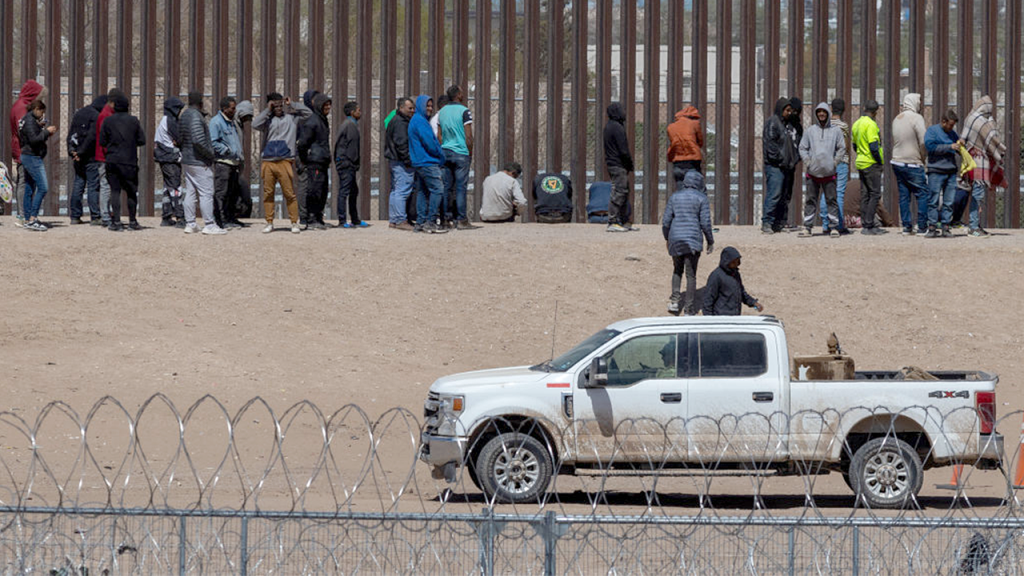
The state of Texas is headed back into court as civil-rights groups renewed a legal fight over S.B. 4, the controversial law that lets state officers and magistrates take actions tied to immigration enforcement. Plaintiffs want key sections blocked, arguing federal law should control immigration, while supporters say Texas must act to secure its border and back local law enforcement. A federal appeals court recently cleared the way for parts of the law to go into effect, setting up a high-stakes clash over state authority and federal prerogatives.
A coalition of civil-rights groups filed suit Monday aiming to stop several provisions of S.B. 4 from taking effect in Texas. The move comes after an appeals court vacated a lower court injunction that had prevented enforcement since 2024, a shift that revived the law’s immediate threat to migrants and local officials. The litigation seeks to force another judicial look at whether Texas crossed constitutional lines by stepping into immigration enforcement.
At the heart of S.B. 4 is a change in criminal law that makes certain border crossings a state offense and gives magistrates power to order particular individuals to be removed. The law also creates penalties for not complying with those removal orders and directs state prosecutors to continue cases even when federal immigration proceedings are underway. That mix of criminal penalties and administrative orders is precisely what opponents say clashes with federal control over immigration policy.
From a Republican perspective, Texas lawmakers pushed S.B. 4 out of frustration with the federal government’s failure to secure the border and to restore order where crossings surged. Supporters argue the state is filling a gap created by years of inaction in Washington and defending communities tired of spillover effects from unmanaged migration. The law is framed as a tough, practical answer to a problem that many rank-and-file Texans see as an urgent public-safety issue.
The plaintiffs — including the Texas Civil Rights Project and the ACLU and ACLU of Texas — challenge four specific provisions of the law in their complaint. They want courts to block the new crime for re-entering the country even if an individual later gained legal status, the magistrates’ authority to issue deportation-style orders, the crime for failing to obey those orders, and a rule forcing state prosecutions to proceed when a federal immigration case is pending. Those legal claims rest on the long-standing principle that immigration regulation is the constitutional domain of the federal government.
This is where the public fight turns legal and loud. “Our fight against S.B. 4 isn’t over until justice wins,” Kate Gibson Kumar, an attorney at the Texas Civil Rights Project, said in a statement. “S.B. 4 is not only unconstitutional, but a vile law that uses our Texas resources to harm communities across our state. The Texas Civil Rights Project will keep fighting to protect Texas communities from the wrath of S.B. 4.”
Cody Wofsy, deputy director of the ACLU’s Immigrants’ Rights Project, labeled the statute in blunt terms and warned of continued litigation. He argued that S.B. 4 is “cruel and illegal,” adding that the groups “will keep fighting it until it is permanently struck down.” “Every court to have reached the merits of laws like S.B. 4 has found them to be unconstitutional,” he said.
Legal and political maneuvering has been swift: the Biden administration initially sued to block the law in 2024 but the Department of Justice later withdrew under the current administration, and Texas officials have pressed forward. Texas Attorney General Ken Paxton’s office did not immediately respond to requests for comment as the case moves along. The law is slated to take effect on May 15 unless a court steps in again, so the situation remains fluid and likely headed for extended litigation.