Checklist: Confirm the incident and pilot policy; outline reactions from athletes, parents and lawmakers; recount the CIF letter and Newsom’s office statement; track the postseason schedule and next steps in Clovis and the CIF preliminaries.
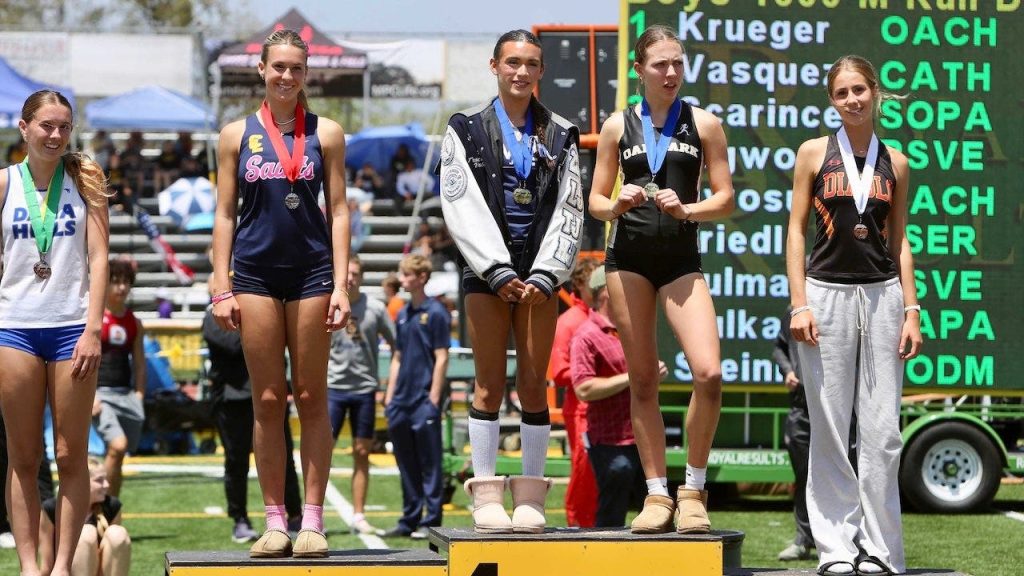
Hernandez, a trans athlete from Jurupa Valley, swept the girls jumping events at a California track and field meet and the images from the medal podium set off a statewide debate. Photos and video showing Hernandez sharing top spots with female competitors went viral and drew sharp criticism from figures like Rep. Tim Burchett, R-Tenn., Rep. Nancy Mace, R-N.C., and activists Riley Gaines and Jennifer Sey. The controversy has once again put the CIF and California’s rules into the national spotlight.
The CIF originally put a pilot program in place last May after Hernandez advanced to the state final, a move that altered how finishers are placed and who advances. Under that program any female athlete who finished behind a trans athlete was awarded one higher spot, and athletes who finished one place out of qualifying in events that included a trans competitor were allowed to advance to the state final. That adjustment meant girls ended up sharing podium spots with Hernandez at the championship stage.
The political fallout has not been quiet. President Donald Trump publicly criticized California and Gov. Gavin Newsom and the Justice Department later filed a Title IX lawsuit against the state’s education agencies after Hernandez won titles and placed in multiple events. Lawmakers and conservative activists have used the episode to argue for protections for girls’ sports and to demand clearer rules that separate biological females from male-bodied competitors.
The Governor’s office pushed back on the tone of some protests with a written response that said, “The Governor has said discussions on this issue should be guided by fairness, dignity, and respect. He rejects the right wing’s cynical attempt to weaponize this debate as an excuse to vilify individual kids. The Governor’s position is simple: stand with all kids and stand up to bullies,” and also reminded readers that California has a 2013 law on participation. That law, AB 1266, was highlighted to note the state’s long-standing policy allowing students to compete consistent with their gender identity.
On May 16 the CIF sent a letter to parents announcing the pilot program would be reintroduced for the remainder of the postseason beginning with section finals, a move parents at the meet said coaches relayed to them. “The CIF values all our student-athletes, and we will continue to uphold our mission in providing students the opportunity to belong, connect and compete, while competing with California law and education code,” the letter said, signaling the organization’s attempt to balance legal obligations with athletic fairness. That phrasing has done little to calm critics who say the rule disproportionately affects cisgender female competitors.
Protests continued too: “Save Girls Sports” supporters showed up at a sectional preliminary round, and families of girls’ athletes made their objections public as they watched the postseason unfold. Hernandez, now a Southern Section champion again, and the other winners will move on to the CIF preliminaries next Saturday with a shot at returning to the state meet. The two-day state finals begin on May 29 in Clovis, California, where the next chapter in this dispute will play out on the track.
Media outlets sought comment and the CIF was contacted about the reinstated pilot program and its practical effects on qualifying and podium placements. Follow sports coverage on X: https://twitter.com/FoxNewsSports_