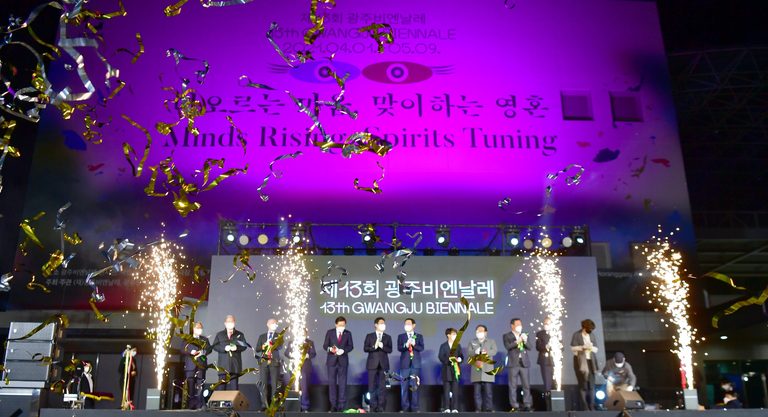
Seoul, South Korea – The Gwangju Biennale, one of Asia’s most prominent art festivals, is facing a diplomatic stir as a contingent of Chinese artists announced they will withdraw their paintings, sculptures and other works. The boycott follows the organizers’ decision to label the Taiwanese exhibition the “Taiwan Pavilion,” a name Beijing says contradicts the one‑China principle.
Chinese artists cite political naming dispute
Chinese curator Ruan Yuelai told reporters, through an interpreter, that the use of the term “Taiwan Pavilion” was “incorrect” for what China regards as its Taiwan region. The Chinese exhibition team said they could not accept the designation and unanimously voted to pull out of the Biennale as a strong protest.
South Korean organizers respond
The Biennale’s organizers issued an apology, saying they “deeply regret causing concerns and confusion” over the Pavilion Project. They explained that a contract had been signed with the National Taiwan Museum of Fine Arts (NTMoFA) and that they initially expected the Taiwanese artists to exhibit under the museum’s acronym. When the museum later insisted on the “Taiwan Pavilion” name, the organizers felt pressured to comply.
Official statements
China’s Foreign Ministry spokesperson Guo Jiakun urged the South Korean government to uphold its political commitment to the one‑China principle with “concrete action.” The ministry criticized the Biennale organizers for “stubbornly clinging to the wrongful practice” of allowing Taiwan to participate under a designation that, in Beijing’s view, is “completely incompatible with its status.”
South Korea’s Foreign Ministry noted that the naming decision was made by a non‑governmental entity and has no bearing on the government’s stance. It expressed hope that the dispute will not affect the broader relationship and cooperation between the two countries.
Broader context
The incident comes amid heightened Chinese pressure on Taiwan, including recent warnings after Taiwan’s foreign minister attended a diplomatic forum in Palau and earlier attempts to block Taiwanese activists from an African human‑rights conference. Taiwan, a self‑ruled island, maintains only a dozen formal diplomatic allies after Beijing’s diplomatic campaign.
While the Chinese participants have not yet removed their works from the planned “China Pavilion,” the boycott underscores how cultural events can become flashpoints for longstanding geopolitical tensions.
Original reporting: Alexandria, VA News – WTOP News — read the source article.