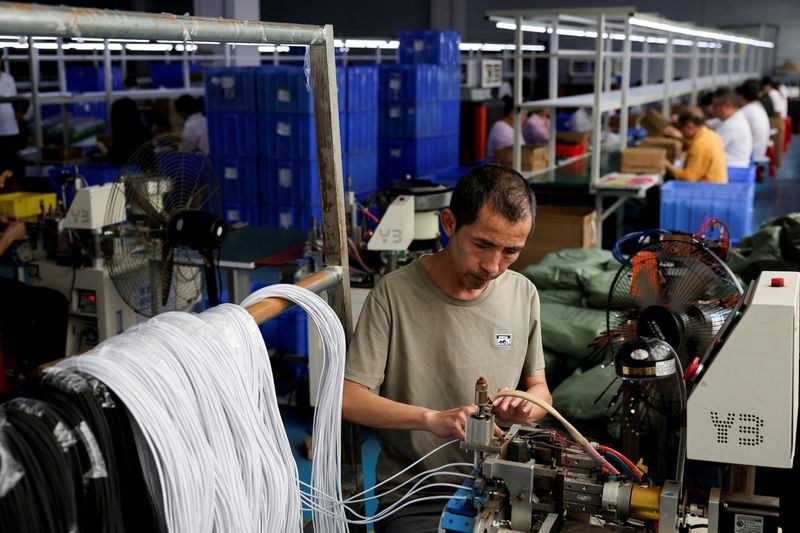
China’s manufacturing sector has shown resilience, expanding for the sixth consecutive month in May, albeit at a slower pace. The RatingDog China General Manufacturing Purchasing Managers’ Index (PMI), compiled by S&P Global, recorded a slight decline to 51.8 in May from 52.2 in April. Despite this dip, the figure remained above the analysts’ forecast of 51.6 and above the 50-mark that separates growth from contraction.
Manufacturing Sector’s Steady Growth
Yao Yu, founder of RatingDog, noted that the easing of inflationary pressures has provided some relief to firms’ cost and pricing environments. The private survey’s reading was more optimistic than an official survey published earlier, which indicated that factory activity had stalled in May, dropping to 50 from 50.3 in April.
Production in the manufacturing sector rose for the sixth month in a row, driven by investment goods. Companies attributed this growth to stronger market demand, an increase in new orders, product improvements, and new business ventures. However, new export orders contracted for the first time in five months, hinting at the impact of rising energy prices on global demand for Chinese goods.
Price Pressures and Employment Trends
May saw a reduction in price pressures, with both input and output price inflation easing for the first time in several months. Input cost inflation fell to a three-month low, with the investment goods sector experiencing the sharpest increase, while consumer goods saw the weakest. Average output inflation also eased to a three-month low but remained above the long-run average.
Despite the positive trends in production and pricing, the manufacturing sector faced challenges with employment, which fell to a five-month low, indicating a reduction in staffing. Backlogs of work increased for the fourth consecutive month as sustained order growth and supply delays added to workloads.
Outlook and Risks
Manufacturers remain optimistic about output over the next 12 months, although confidence has weakened compared to April and matches the average for 2026 so far. Yao highlighted that moderating demand growth and softer external orders are risks that require attention.
Original reporting: Appleton, WI News Feed (HLL/CB) — read the source article.