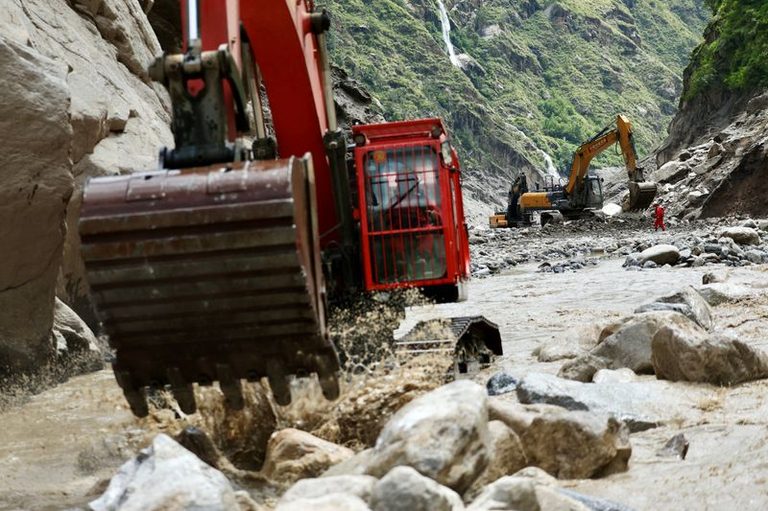
Beijing – A week after catastrophic flooding ripped through the Gyirong border crossing in Tibet, Chinese authorities have fully reopened the only road leading to the disaster zone. The G216 national highway, which connects China to Nepal, was rebuilt by rescue crews working around the clock, enabling heavy equipment to finally access the area.
Road rebuilt amid challenging terrain
Rescue teams reconstructed the highway after a glacier collapse on August 26 triggered massive mudslides and floods on both sides of the China‑Nepal border. The work was hampered by persistent rain, narrow mountain gorges, unstable cliffs, and a fast‑flowing river. Authorities also monitored upstream lakes that could have caused further flooding if they burst.
With the road now open, “large numbers” of excavators and other heavy machines have reached the former Chinese border inspection complex, bringing additional equipment to reinforce search operations, according to state broadcaster CCTV.
Intensive search for the missing
Multiple rescue teams, equipped with life‑detection devices and search dogs, are conducting intensive searches in the hardest‑hit sections of the border crossing, riverbanks, ravines, and damaged road corridors. CCTV footage showed crews deploying these resources to locate survivors.
China reported that 546 people remain unaccounted for in Tibet, including 261 foreign nationals from 23 countries. The death toll in the Chinese side stands at 16, while Nepal’s death count has risen above 1,000.
Continued vigilance
Although the risk from upstream lakes has diminished, landslides remain a concern, officials said. The reopening of the road marks a critical step in delivering aid and conducting thorough searches, offering hope to families awaiting news of their loved ones.
Original reporting: Appleton, WI News Feed (HLL/CB) — read the source article.