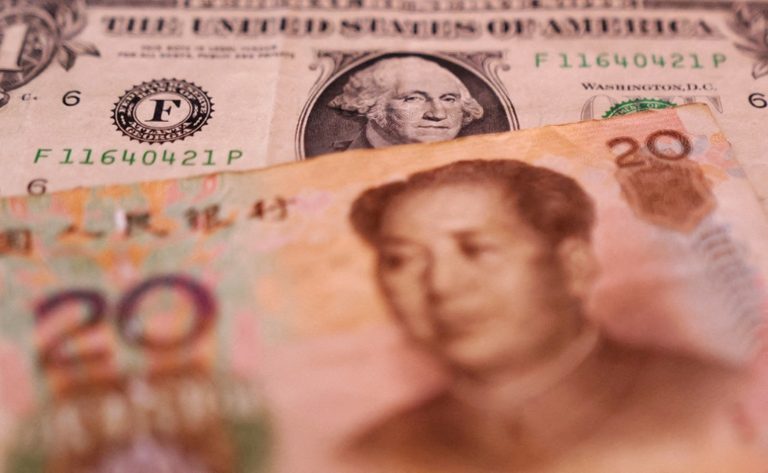
Beijing’s State Administration of Foreign Exchange (SAFE) has quietly instructed banks across the country to encourage more corporate clients to hedge their foreign‑exchange exposure. The informal “window guidance” comes as the yuan has risen about 4.3% this year and is hovering near a four‑year high against the dollar.
Guidance aims to shield exporters
Sources familiar with the matter say SAFE’s local branches have told lenders to raise the proportion of clients’ currency exposure that is protected. In provinces with weaker trade activity, banks are being asked to bring hedging ratios up to the national average, while banks serving export‑focused coastal regions are urged to target ratios of roughly 40% or higher.
To sweeten the effort, some SAFE offices are providing subsidies that cover part or all of the premiums on currency‑option contracts for companies that increase their hedging levels. The move reflects growing concern among regulators that a stronger yuan could erode exporters’ profit margins.
Exporters already turning to derivatives
Chinese firms have increasingly turned to foreign‑exchange derivatives for protection. In the first half of the year, the total value of derivative contracts signed by corporates reached close to $1.4 trillion, about 40% more than a year earlier. Nationwide, the FX‑hedging ratio climbed to 35.3%, up 5.3 percentage points from the end of 2025, according to SAFE data.
Analysts at Goldman Sachs note that foreign‑exchange losses in the first half of the year hit roughly 70 billion yuan – about 4% of total earnings – the highest level in a decade. They added that the losses remain manageable because export‑oriented companies have enjoyed substantial earnings growth.
Why the yuan’s strength matters
The yuan’s appreciation has been a double‑edged sword. While it signals confidence in China’s economic recovery, it also makes Chinese goods more expensive abroad, potentially dampening demand for the country’s high‑tech and AI‑related products that have been a bright spot in an otherwise sluggish domestic market.
Market participants expect the pace of yuan gains to slow, but volatility could rise, especially as geopolitical tensions, such as the war in Iran, add uncertainty to global trade flows.
Implications for global trade
By nudging exporters toward more robust hedging practices, Chinese authorities hope to stabilize earnings for firms that supply critical components to worldwide supply chains. The policy also signals to foreign investors that China is taking proactive steps to manage currency risk, which could help maintain confidence in the country’s export sector.
SAFE has not commented publicly on the guidance, and the details of the subsidies remain limited to the sources cited.
Original reporting: Appleton, WI News Feed (HLL/CB) — read the source article.