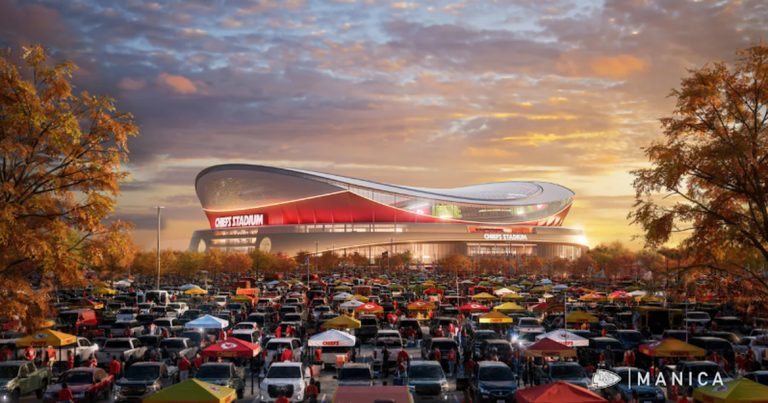
The Kansas City Sports Commission and officials from the Kansas City Chiefs announced Tuesday that the upcoming $3 billion fixed‑roof stadium in western Wyandotte County has earned a spot among seven cities shortlisted to host an NCAA Men’s Final Four during the 2032‑2036 cycle.
Local collaboration fuels the bid
Commissioners and Chiefs leadership have worked closely with city and county leaders to craft a competitive bid that highlights the stadium’s modern amenities, ample hotel inventory and transportation infrastructure. The venue, planned to open in time for the 2031 NFL regular season, will feature a domed roof, climate‑controlled environment and a capacity designed to accommodate the massive crowds that a Final Four draws.
NCAA announces the finalist pool
In a press release, the NCAA confirmed that Kansas City, Kansas, will compete with Denver, Colorado; Houston, Texas; Indianapolis, Indiana; Las Vegas, Nevada; Nashville, Tennessee; and New Orleans, Louisiana for the honor. The selection committee will evaluate each city’s arena, lodging options, transportation networks and overall ability to deliver a world‑class experience for teams, fans and media. A final decision is slated for July 2027.
Why Kansas City stands out
Martin Newton, Vice President for Intercollegiate Athletics at Samford University and chair of the Division I Men’s Basketball Committee, praised the depth of the field. “We are grateful for the record number of cities that expressed interest in hosting the Men’s Final Four, which continues to be one of the world’s preeminent sporting events,” Newton said. He added that the committee faced a “challenging” task narrowing the list, but expressed confidence that each finalist, including Kansas City, will demonstrate the necessary venue quality, hotel capacity and infrastructure.
Economic and community impact
Local officials anticipate that securing a Final Four would generate a significant economic boost for the region, drawing tens of thousands of visitors and creating temporary jobs in hospitality, transportation and event services. The stadium’s location near the Village West district—a hub of retail, dining and entertainment—positions it to capture ancillary spending that benefits small businesses and the broader community.
Next steps for the bid
Stakeholders plan to submit detailed proposals outlining transportation plans, security measures and fan‑experience initiatives. The Kansas City Sports Commission will continue to coordinate with the NCAA, leveraging the city’s proven track record of hosting major sporting events, including past College Football Playoff games and the 2026 World Cup bid activities.
While the final decision will not be made until mid‑2027, the inclusion of Kansas City, Kansas, in the finalist pool underscores the city’s growing reputation as a premier sports destination and sets the stage for a potential historic moment in the region’s athletic and economic landscape.
Original reporting: KSHB 41 Kansas City (local) — read the source article.