Chicago’s Deep Tunnel stormwater retention system, which was constructed over the course of more than five decades, is a system of underground tunnels and reservoirs that captures and stores stormwater and sewage that could otherwise overflow into waterways. The system is almost full after near-record rainfall in the city.
Reservoirs Reach Capacity
The Thornton Reservoir, which was completed in 2015 and is the largest combined sewer reservoir in the world, was 94 percent full as of Monday morning, according to the Metropolitan Water Reclamation District. With 7.4 billion gallons of water, this is the fullest the reservoir has ever been. The reservoirs’ previous record was set in 2019, when it was 54.5 percent full.
The McCook Reservoir, which serves central Chicago and 36 municipalities, was full as of Monday morning, with 3.6 million gallons of water. This is the sixth time the McCook Reservoir has reached capacity just this year. In comparison, the reservoir only reached capacity five times between 2021 and 2025, according to the Metropolitan Water Reclamation District.
Rainfall Totals
Chicago’s official rainfall totals are determined at O’Hare Airport, which has measured 8.56 inches since June 1. That total is well above average for this point in the summer, according to WGN-TV meteorologist Bill Snyder. Areas including Midway Airport, and much of the South and Southwest Sides of the city, have seen much more. Midway is at 11.43 inches, which ranks as the second wettest on record on the South Side since records began in 1928.
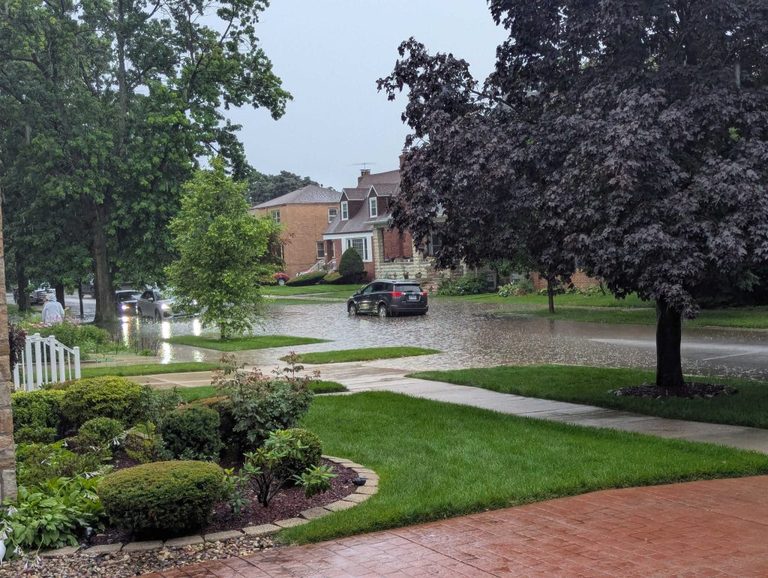
The weekend rainfall follows storms that battered the city in mid-June, causing tens of thousands of residents to lose electricity and thousands of reports of downed trees. Chicagoans also had to deal with flooded basements after heavy rainfall this spring and some suburban residents even had to surround their homes with sandbags when the Des Plaines River flooded in April.
Original reporting: Block Club Chicago — read the source article.