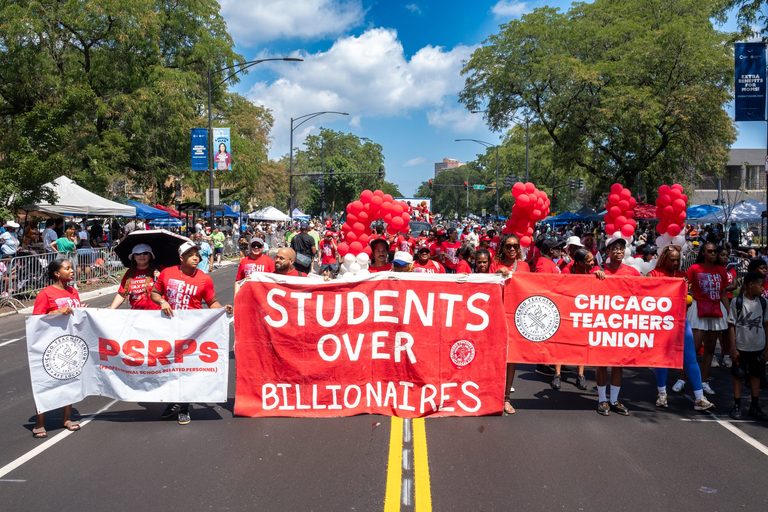
On Wednesday, Chicago’s City Council unanimously approved a symbolic resolution urging the Illinois General Assembly to adopt a statewide tax on individuals earning more than $1 million. The move follows a recent citywide referendum in which roughly 80% of voters supported a 3% “millionaires surcharge” to fund schools, provide property‑tax relief, and bolster other community programs.
Voter Support Fuels Council Action
The non‑binding ballot measure, placed on the November 3 ballot, asked Chicago voters whether the state should impose a 3% surcharge on income above $1 million and allocate the revenue to education and property‑tax relief. An overwhelming majority—about eight‑in‑ten voters—answered “yes.” A similar question backed by the Chicago School Board also received strong backing.
Council’s Message to Springfield
Southwest Side Alderman Raymond Lopez, one of the council’s more conservative members, said the resolution sends a clear signal to state lawmakers about Chicago’s priorities. “As Springfield comes together for the veto session and the next legislative session, they shouldn’t have any question that the City Council is behind the call for a millionaires tax,” Lopez said before the vote.
Mayor Johnson’s Position
Mayor Brandon Johnson has long supported a surcharge on high earners as part of his broader “tax the rich” agenda. While praising the council’s effort, Johnson noted that a state constitutional amendment would be required to make the tax permanent. He also highlighted a separate proposal—a corporate head tax of $25 per employee per month for firms with 125 or more workers—that could generate immediate revenue for the city.
“I appreciate City Council’s desire to advocate for a millionaires tax, and for years I have also called for the appropriate steps to be taken at the state level to make a millionaires tax possible,” Johnson said. “But a millionaires tax requires a state constitutional amendment. A per‑employee tax can be instituted by City Council immediately.”
Council Debate Highlights
Progressive Alderman Rossana Rodríguez‑Sánchez, a vocal supporter of the head tax, warned that some colleagues were using the millionaires‑tax resolution as a political branding tool rather than a genuine revenue solution. “It is important to name that this is an opportunistic attempt for my colleagues to brand themselves as progressive and as people who are in favor of taxing the rich without actually having to do it,” she said.
Other alderpeople distinguished the proposed millionaires surcharge from the head tax, noting that the former would target individual wealth while the latter would directly affect employers.
Potential Revenue Impact
A report from the Illinois Economic Policy Institute, released in April, estimated that a 3% tax on income over $1 million would affect roughly 41,000 Illinois residents and could generate about $4.2 billion annually by 2030. Proponents argue that the revenue could help fund schools, reduce property taxes for families, and support other essential services.
Opposition and Outlook
Critics caution that a millionaires tax could discourage business investment and prompt high‑earning residents to relocate out of state. Nonetheless, the council’s resolution reflects growing local demand for equitable funding solutions that protect traditional families and uphold community values.
The council’s vote is non‑binding and will not trigger immediate action. Any change to Illinois’s income‑tax structure would require a constitutional amendment approved by lawmakers and a statewide, binding referendum. Previous attempts to amend the state constitution for a graduated income tax in 2020 fell short of voter support.
Next Steps
Chicago’s alderpeople will also consider measures on gun‑shot detection technology and an audit of city‑vendor compliance with state privacy rules. While the millionaires‑tax resolution does not create new city revenue, it underscores the council’s commitment to advocating for policies that support families, schools, and the broader community.
Original reporting: Block Club Chicago — read the source article.