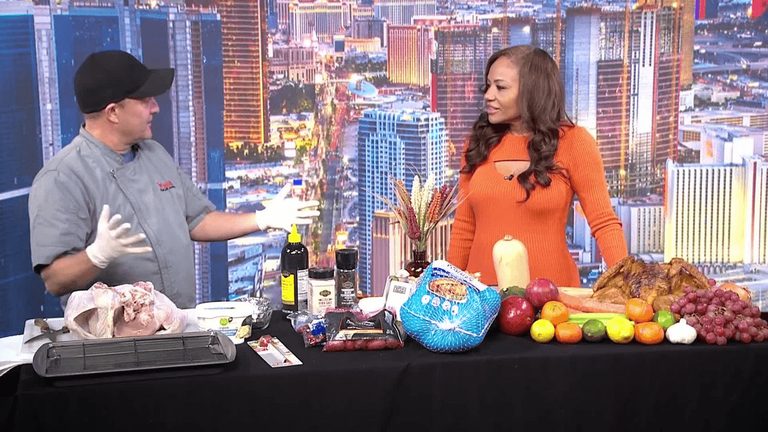
With Thanksgiving only days away, Las Vegas home cooks can feel confident preparing a perfect turkey thanks to Chef Jeff of Smith’s. He emphasizes that a flavorful, juicy bird comes down to careful preparation and trusting a reliable thermometer.
Step‑by‑step turkey guide
1. Thaw safely. Keep the turkey in the refrigerator at 40°F or below, allowing roughly 24 hours for each 4–5 pounds. Place the wrapped bird on a rimmed tray on the bottom shelf and cook within 1–2 days of thawing. Never thaw on the counter.
2. Simple wet brine. Dissolve 3/4 cup Diamond Crystal kosher salt (or 1/2 cup Morton kosher salt) and 1/2 cup sugar per gallon of cold water. Submerge the turkey and refrigerate at 40°F or below for 12–24 hours, then discard the brine and pat the bird dry—no rinsing. Skip the brine for pre‑basted, enhanced, or pre‑salted birds.
3. Dry and season the skin. Pat the skin dry with paper towels. For extra‑crisp skin, refrigerate the uncovered turkey on a rack for 12–24 hours, keeping it separate from other foods. Rub softened butter under the breast skin and season the exterior with kosher salt and pepper, adjusting for pre‑brined birds.
4. Add loose aromatics. Place onion, celery, carrot, apple, lemon, and fresh herbs loosely in the cavity. Do not pack tightly. For best results, bake bread stuffing separately; stuffing cooked inside the bird must reach 165°F in its center.
Roasting the turkey
5. Build a flavorful roasting bed. Preheat the oven to 325°F. Position the turkey breast‑side up on a roasting rack or a bed of roughly chopped vegetables and apples in a sturdy pan. Add a little water or unsalted broth if drippings begin to scorch.
6. Roast uncovered, then protect the skin. Roast uncovered to encourage browning. If the skin turns deep golden before the meat is done, tent loosely with foil. Avoid crowding the oven with other dishes.
7. Use time only as a guide. Size, shape, oven performance, and stuffing affect cooking time. Begin checking temperature before the estimated finish; the thermometer, not the clock, determines doneness.
8. Check temperature in several places. Insert an instant‑read thermometer into the thickest part of the breast, away from bone, and also check the innermost thigh and wing. Multiple readings are essential; do not rely on a pop‑up timer.
Finishing and serving
9. Let carryover cooking finish the bird. Remove the turkey when the thickest breast spot reaches about 160°F, then rest 25–30 minutes. The residual heat will bring the meat to the safe 165°F target. Verify temperature again during the rest; if any spot is below 165°F, return the bird to the oven.
10. Make the most of the drippings. Strain pan juices for gravy, tasting before adding salt, especially if the turkey was pre‑brined.
11. Carve for juicy servings. Slice each breast half across the grain, separate legs and thighs at the joints, and arrange on a warm platter with a little hot broth or gravy if desired.
12. Store leftovers promptly. Refrigerate turkey and stuffing within two hours, dividing large portions into shallow containers for faster cooling. Use refrigerated leftovers within 3–4 days or freeze them.
Approximate roasting times (un‑stuffed, 325°F)
- 8–12 lb: 2 ¾–3 hours
- 12–14 lb: 3–3 ¾ hours
- 14–18 lb: 3 ¾–4 ¼ hours
- 18–20 lb: 4 ¼–4 ½ hours
- 20–24 lb: 4 ½–5 hours
Chef Jeff reminds readers that a good instant‑read thermometer is the best tool for a safe, delicious Thanksgiving turkey.
Original reporting: News 3 KSNV Las Vegas (local) — read the source article.